
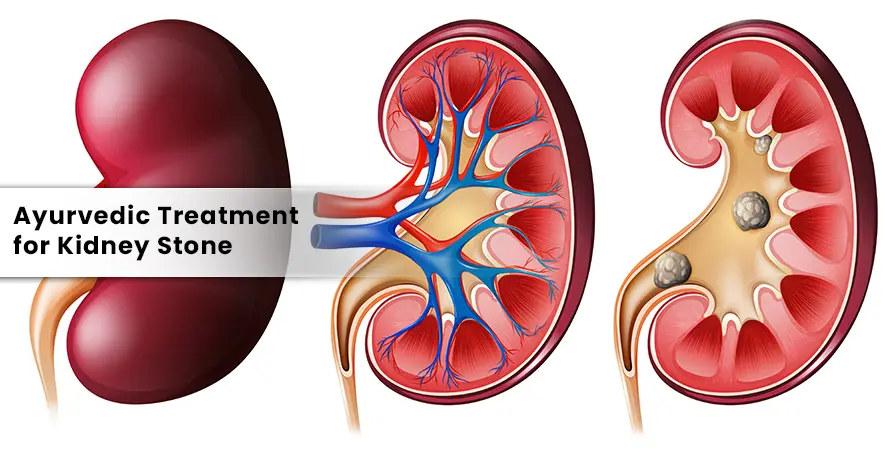
Kidney stones are hard deposits that form in the kidneys. The crystalline deposits of minerals like sodium, calcium, oxalates and uric acids are the main cause. They can cause severe pain when passing through the urinary tract. It is developed when urine gets concentrated due to dehydration or metabolic disorders.
Common symptoms of Kidney stone
- Severe pain radiating in lower back and lower abdomen
- Burning during micturition
- Frequency in urination
- Blood in urine
- Nausea and vomiting
- Difficulty passing urine
- Recurrent urinary tract infections
In Ayurveda, kidney stones is called as Mutrashmari ("Ashma" meaning stone, and "Ari" meaning enemy, reflecting the severe pain they cause). It is due to the vitiation of Vata, Pitta, and Kapha Doshas, particularly Kapha. Improper diet and lifestyle habits lead to the accumulation of doshas within the urinary system, resulting in the formation of stone-like structures.
Poor digestion, unhealthy diet, dehydration, and the accumulation of metabolic toxins (Ama) all contribute to stone formation
Causes of Mutrashmari
- Excessive intake of heavy, oily, and incompatible foods
- Reduced water intake
- Sedentary lifestyle
-Suppression of natural urges, especially urination
- Metabolic disturbances
- Recurrent urinary tract disorders
Treatments for kidney stone

The Ayurvedic approach focuses on improving digestion, balancing the doshas, and using natural diuretics and stone breaking herbs to clear the urinary tract.
Newly formed or early- stage stones are considered and treated with oral medications. General procedures in the early onset of the disease are, Snehana (oleation) and Swedana (fomentation). They are helpful to dislodging the stones and address the root of the condition
Shodhana (Detoxification)- Cleansing the body of accumulated toxins using panchakarma. It helps in dosha balancing, detoxification, and reducing the chances of recurrence.
Shamana (Pacification)- It is with internal medication and single drug therapy to calm the aggravated doshas
Lifestyle modification- Diet, adequate hydration, moderate exercise and with other life style modifications like- timely food habits, sleep, voiding urine without suppressing, reduce stress.
Diet to follow:
Whole grains - barley, old rice, wheat etc.
Vegetables - bottle gourd, ash gourd, cucumber etc.
Legumes - horse gram, green gram etc.
Fruits - watermelon, pomegranate, lemon etc.
Fluids - buttermilk, barley water, coconut water, coriander water, cumin water, fennel water etc.
Avoid foods which are rich in oxalate and uric acid, avoid processed, packaged food and carbonated drinks.
If the stone fails to dissolve and pass through the urinary tract after the internal medications like, alkalis, snehana, and panchakarma procedures, then a surgical procedures may be advisable.
Consult a physician immediately if you experience:
- Severe and continues pain in the back or side
- Blood in urine
- High fever with chills
- Complete urinary blockage
Reminder: A qualified Ayurvedic practitioner can personalize the treatments based on your dosha imbalance and stone size. Remember that Ayurveda is highly effective for small to medium stones, larger stones (8 mm and above) may still require modern medical interventions.
Frequently Asked Question
1. What foods are recommended for kidney stone patients?
- Adequate hydration.
- Fruits and vegetables.
- Whole grain and legumes
2. What foods are to be avoided for kidney stone patients?
- Oxalate rich foods
- Excessively salty foods
- Deep-fried foods
- Processed foods
- Carbonated beverages
- Excessive tea and coffee
3. Which Ayurvedic medicine is best for kidney stones?
Depending on patient’s condition only, an Ayurvedic physician may prescribe medicines. It may include kashayam, tablets and asava etc. The medicines are to be taken under medical supervision.
4. Can Ayurvedic treatments avoid surgery?
Small to medium stones, are effective with appropriate treatment and hydration. However, larger stones or stones causing obstruction, infection, or severe symptoms may require medical or surgical intervention. The treatment approach should be decided after proper evaluation.

October 16, 2026
October 09, 2026

September 24, 2026

September 19, 2026

September 18, 2026
September 03, 2026
We use cookies that are necessary for the smooth operation of the website, to improve our website and to display advertising relevant to you on social media platforms and partner websites. By clicking "Accept all", you agree to the use of cookies for convenience features and statistics and tracking. You can change these settings again at any time. If you do not agree, we will limit ourselves to technically necessary cookies. For more information, please see our privacy policy .