
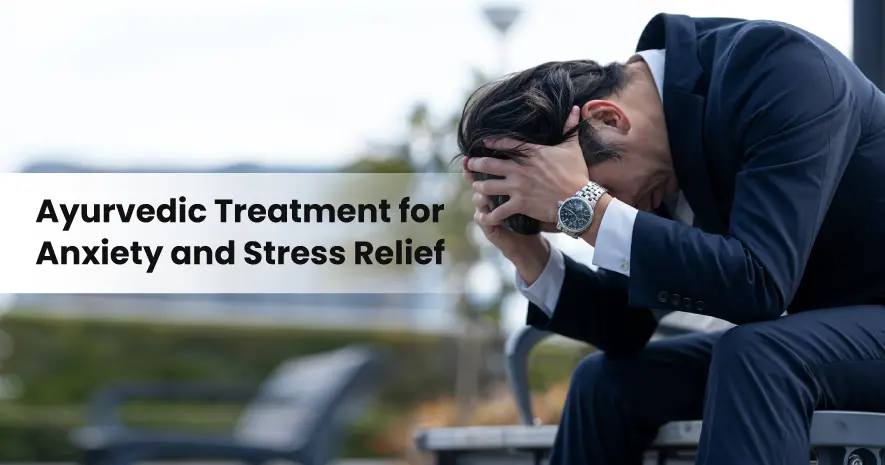
Anxiety and stress are among the most prevalent mental health issues in modern society. The fast-paced lifestyle, excessive workload, financial instability, and emotional distress contribute significantly to these conditions. While conventional medicine provides pharmacological interventions, Ayurveda—a holistic system of medicine—offers natural, sustainable methods to manage and alleviate anxiety and stress by restoring harmony between the body, mind, and spirit. This article explores Ayurvedic principles, treatment modalities, and evidence-based approaches for managing anxiety and stress, emphasizing personalized therapies, diet, herbal remedies, and lifestyle modifications.
Understanding Anxiety and Stress in Ayurveda
According to Ayurveda, stress and anxiety arise due to imbalances in Vata, Pitta, and Kapha Doshas, particularly Vata Dosha, which governs the nervous system. The continuous movement, instability, and irregularity of Vata can lead to restlessness, worry, and emotional instability. Based on Ayurvedic texts, stress can be categorized into three types: Adhyatmik Stress, which originates from internal thoughts and emotions; Adhidaivik Stress, caused by external environmental factors, such as weather or natural disasters; and Adhibhautik Stress, which stems from physical health issues, financial problems, or relationship struggles. Understanding these stressors helps in tailoring an appropriate Ayurvedic treatment plan.
Ayurvedic Approach to Anxiety and Stress Relief
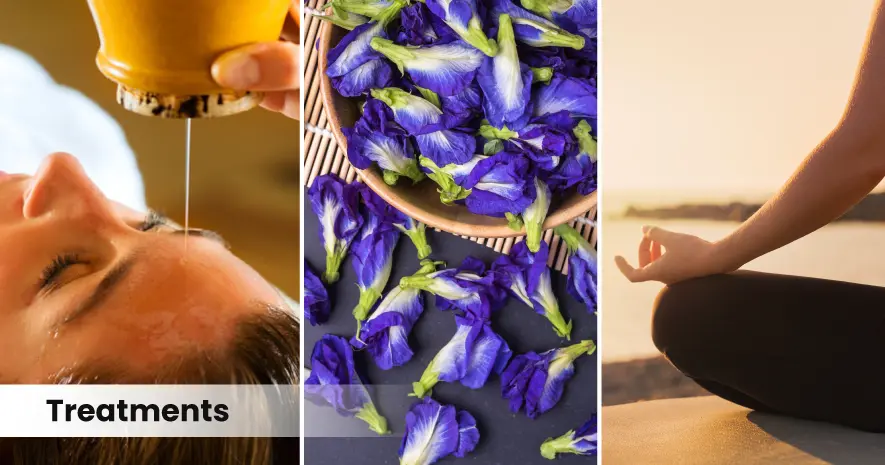
Ayurveda emphasizes a multi-dimensional approach to stress management, which includes herbal remedies, Panchakarma therapies, dietary modifications, lifestyle changes, and mind-body practices like yoga and meditation. Among the most potent herbal remedies are Ashwagandha, Brahmi, Jatamansi, Shankhpushpi, and Tulsi. Ashwagandha is known for its adaptogenic properties and helps in lowering cortisol levels while enhancing resilience to stress. Brahmi improves cognitive function and reduces anxiety, promoting mental clarity. Jatamansi is a natural nervine tonic that alleviates stress and promotes sound sleep. Shankhpushpi supports cognitive enhancement and reduces hyperactivity associated with stress. Tulsi, or holy basil, has adaptogenic properties that aid in combating stress effectively.
Panchakarma therapies are integral to Ayurvedic treatment for anxiety and stress. Abhyanga, a warm oil massage using sesame or ashwagandha oil, helps calm the nervous system. Shirodhara, a treatment in which warm herbal oil is continuously poured on the forehead, induces deep relaxation and reduces anxiety. Nasya, or nasal therapy, involves the instillation of herbal oils to clear mental fog and enhance mental clarity. Swedana, an herbal steam therapy, helps in relaxing tense muscles and reducing stress-related stiffness.
Diet plays a crucial role in mental well-being. Ayurveda recommends a Sattvic diet that enhances mental clarity and reduces anxiety. Warm, nourishing foods like milk, ghee, and herbal teas are encouraged. Nuts and seeds such as almonds, walnuts, and flaxseeds support brain health. Avoiding stimulants like caffeine, processed foods, and refined sugars is essential. Drinking warm herbal teas, such as Brahmi tea or Chamomile tea, promotes relaxation and soothes the nervous system.
Lifestyle modifications are equally important in managing stress. Following a regular sleep routine and ensuring seven to eight hours of quality sleep balances the circadian rhythm. Daily physical activity, particularly yoga and light exercise, helps in reducing accumulated stress. Limiting excessive screen time is crucial for maintaining mental peace. Spending time in nature and engaging in mindful activities contribute significantly to overall well-being.
Yoga and meditation form a fundamental part of Ayurveda’s approach to anxiety relief. Yoga poses like Balasana (Child’s Pose), Savasana (Corpse Pose), and Vrikshasana (Tree Pose) help reduce stress, calm the mind, and enhance focus. Pranayama techniques, such as Anulom Vilom (Alternate Nostril Breathing) and Bhramari Pranayama (Bee Breathing), regulate breath and calm the nervous system. Regular meditation, practiced for at least ten to fifteen minutes daily, aids in stress management and enhances mental clarity.
Bhagavad Gita’s Perspective on Stress Management
The Bhagavad Gita provides valuable insights into mental resilience and stress management. The episode of Arjuna’s dilemma in the Kurukshetra war illustrates anxiety and how Krishna’s guidance helped him develop clarity and inner strength. Krishna advised Arjuna to focus on duty without attachment to results, develop equanimity and self-discipline, and overcome fear through knowledge and devotion. This philosophy aligns with Ayurvedic mental health practices that emphasize balance, acceptance, and self-awareness.
Ayurveda provides a comprehensive and holistic approach to anxiety and stress relief by addressing diet, herbal remedies, Panchakarma therapies, lifestyle modifications, and mind-body practices like yoga and meditation. Unlike conventional medicine, which often focuses on symptom management, Ayurveda aims to treat the root cause by restoring balance to the Doshas and enhancing resilience to stress. By incorporating these natural therapies, individuals can experience lasting relief from anxiety, improved mental clarity, and an overall sense of well-being.Ayurvedic interventions such as Ashwagandha, Brahmi, and Tulsi are powerful adaptogenic herbs for stress relief. Shirodhara and Abhyanga deeply relax the nervous system, while a Sattvic diet and adherence to daily routines (Dinacharya) play a vital role in mental health. Yoga, Pranayama, and Meditation enhance emotional resilience, and the teachings of the Bhagavad Gita offer valuable psychological insights into stress management. By adopting Ayurvedic practices, individuals can naturally and effectively manage anxiety and lead a balanced, harmonious life.
October 16, 2026

October 09, 2026

September 24, 2026

September 19, 2026

September 18, 2026
September 03, 2026
We use cookies that are necessary for the smooth operation of the website, to improve our website and to display advertising relevant to you on social media platforms and partner websites. By clicking "Accept all", you agree to the use of cookies for convenience features and statistics and tracking. You can change these settings again at any time. If you do not agree, we will limit ourselves to technically necessary cookies. For more information, please see our privacy policy .