
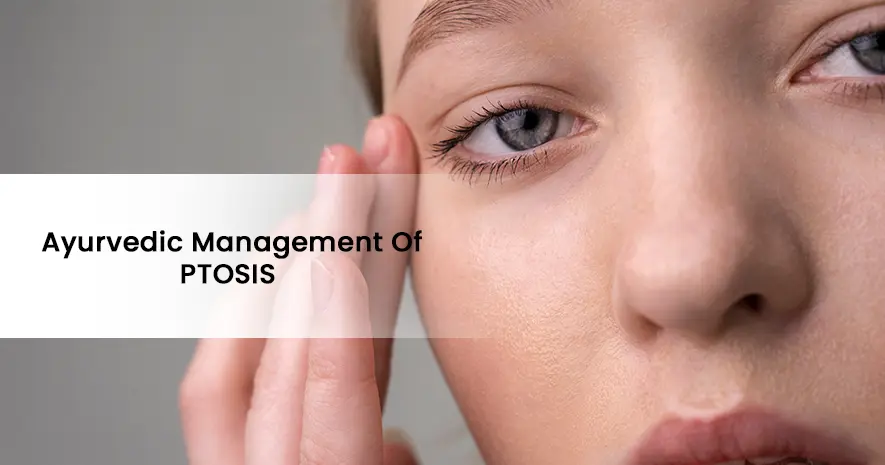
Ptosis, commonly known as drooping of the upper eyelid, can affect one or both eyes. It may partially or fully obstruct vision, cause eye strain, headaches, or give a tired appearance. While modern medicine often points to surgical correction for significant cases, Ayurveda offers a holistic, conservative approach focused on balancing the underlying Dosha imbalance, primarily Vata to strengthen muscles, nerves, and tissues around the eyes.
Understanding Ptosis: Ayurvedic view
Ayurveda correlates ptosis with Vatahata Vartma (or Vartma Sthambha/Sankocha), a Vata dominant eye disorder affecting the Vartma (eyelids). Vitiated Vata disrupts the Vartma-Shuklagata Sandhi, leading to symptoms like drooping (vimukta sandhi), reduced mobility (nischeshata), and difficulty closing the eyelids. Classical texts like those of Sushruta and Vagbhata describe it, often noting it as challenging (asadhya – incurable in some contexts), but clinical case reports show encouraging results with conservative Vata-pacifying management
Common Causes According to Ayurveda
Vata aggravation arises from:
- Irregular sleep, excessive screen time, or strain (Doorekshana).
- Trauma, physical exhaustion, or cold exposure after heat.
- Suppression of natural urges, stress, or improper diet (e.g., excessive dry, cold, or bitter foods).
- Aging related Dhatu kshaya (tissue depletion) or Avarana (obstruction).
Ayurvedic Management Strategies
Ayurvedic treatment emphasizes Vata shamana (pacification), Bramhana (nourishment), and localized therapies to rejuvenate eye muscles and nerves. A typical protocol combines internal medicines, external therapies (Netra Kriyakalpa), Panchakarma, diet, and lifestyle changes. Duration is often 7- 45 days or more, depending on severity.
1. External Therapies (Netra Kriyakalpa and Panchakarma)
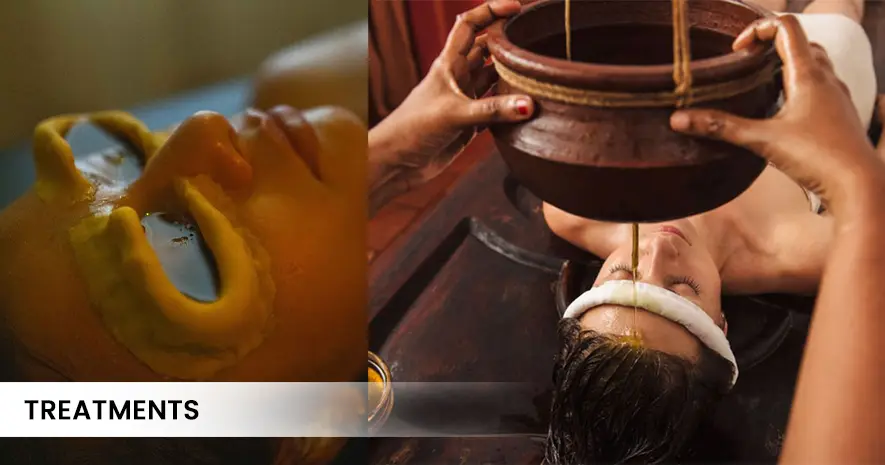
- Nasya: Medicated oils like Anu Taila, Panchendriyavardhan Taila, or Ksheerabala Taila dropped into nostrils. This nourishes cranial nerves and the upper body.
- Netra Tarpana / Netra Basti: Retention of medicated ghee (e.g., Triphala Ghrita) over the eyes using a dough ring. It deeply nourishes and strengthens eyelid muscles.
- Netradhara / Seka: Gentle pouring of herbal decoctions over closed eyes.
- Shirodhara / Shiropichu / Shirobasti: Oil pouring or retention on the head to calm Vata and support neurological health.
- Abhyanga and Swedana: Facial/head massage with oils like Ksheerabala Taila, followed by mild sudation (e.g., Eranda Patra Pottali).
These therapies are often administered in short intensive courses (e.g., 7 days) with follow-ups.
2. Internal Medicines
Common Vata-pacifying and nerve-strengthening formulations include:
- Kashayams: Dhanadanayanadi Kashayam, Dhanwantharam Kashayam, Drakshadi Kashayam.
- Ghritas: Ksheerabala (101 avartha), Jeevantyadi Ghritam, Triphala Ghrita.
- Others: Ekangveer Rasa, Ashwagandha, Bala, Dashmoolarishta.
- Herbs like Ashwagandha and Triphala support muscle tone and detoxification.
3. Diet and Lifestyle (Ahara-Vihara)
- Favor: Warm, nourishing foods like mung dal khichdi, ghee, soups, cooked vegetables, milk preparations. Include Vata pacifying spices (ginger, cumin).
- Avoid: Cold, dry, processed foods, excessive caffeine, late nights, eye strain.
- Daily Practices: Gentle eye exercises (palming, blinking), warm compresses, adequate sleep, head/neck massage, and Pranayama (e.g., Anuloma Viloma).
Home Support Tips (supportive, not curative):
- Mild warm oil massage around closed eyelids.
- Triphalachoorna with warm water at night.
- Ghee application
Evidence from Case Studies
Clinical case reports demonstrate positive outcomes. In one case, a 55-year-old female with bilateral ptosis showed significant improvement after 8 days of Nasya, Shirodhara, Shiropichu, Padabhyanga, Shiroabhyanga, and oral medications.
In another, a 69-year-old female with post-surgical ophthalmoplegia (third and sixth cranial nerve palsy) experienced remarkable improvement in ptosis following Panchakarma, Netrakriyakalpa, and oral medicines (Dhanadanayanadi Kashaya and Ekangavira Rasa).
Prevention and When to Seek Help
Maintain eye health with balanced routines, protect from trauma/sun, and manage underlying conditions (diabetes, hypertension). Early intervention yields better outcomes.
FAQs on Ayurvedic Management of Ptosis
Q1: Can Ayurveda completely cure ptosis?
Ayurveda can significantly improve symptoms, muscle tone, and eyelid position in many cases, especially mild to moderate or Vata related acquired ptosis. Complete resolution depends on the cause, duration, and individual response. Severe congenital or neurological cases may require integrated care or surgery alongside supportive Ayurvedic therapies.
Q2: How long does Ayurvedic treatment for ptosis take?
Intensive therapies (Nasya, Tarpana, Shirodhara) are often given for 7-15 days, with oral medicines continued for 1-2 months or longer. Visible improvement may start within 1-4 weeks, but sustained results require consistency and follow-up.
Q3: Are there any side effects of Ayurvedic treatments?
When administered by a qualified practitioner using authentic medicines, side effects are minimal. Some therapies may cause temporary mild discharge or fatigue as part of detoxification.
Q4: What home remedies can I try for mild ptosis?
Supportive measures include gentle warm oil massage (sesame or Ksheerabala), palming exercises, adequate sleep, and avoiding eye strain. These are not substitutes for professional treatment.
Q5: Is surgery necessary for ptosis?
Modern surgery is effective for structural issues. Ayurveda is a good conservative option for those preferring non-surgical approaches or as pre/post-surgical support. Consultation with both an ophthalmologist and Ayurvedic doctor is recommended.
Q6: Which Dosha is mainly involved in ptosis?
Primarily Vata Dosha, which governs movement and nervous system function. Treatments focus on nourishing and pacifying Vata while strengthening the affected tissues.
Q7: Can diet alone help manage ptosis?
Diet plays a supportive role by balancing Vata (warm, unctuous, nourishing foods). It works best combined with therapies and medicines, not in isolation for moderate to severe cases.
Q8: Is Ayurvedic treatment safe for children or elderly with ptosis?
Yes, with proper customization by an experienced physician. Gentle therapies are often suitable, but thorough assessment (including modern diagnostics) is essential.
October 16, 2026
October 09, 2026
September 24, 2026

September 19, 2026

September 18, 2026
September 03, 2026
We use cookies that are necessary for the smooth operation of the website, to improve our website and to display advertising relevant to you on social media platforms and partner websites. By clicking "Accept all", you agree to the use of cookies for convenience features and statistics and tracking. You can change these settings again at any time. If you do not agree, we will limit ourselves to technically necessary cookies. For more information, please see our privacy policy .