
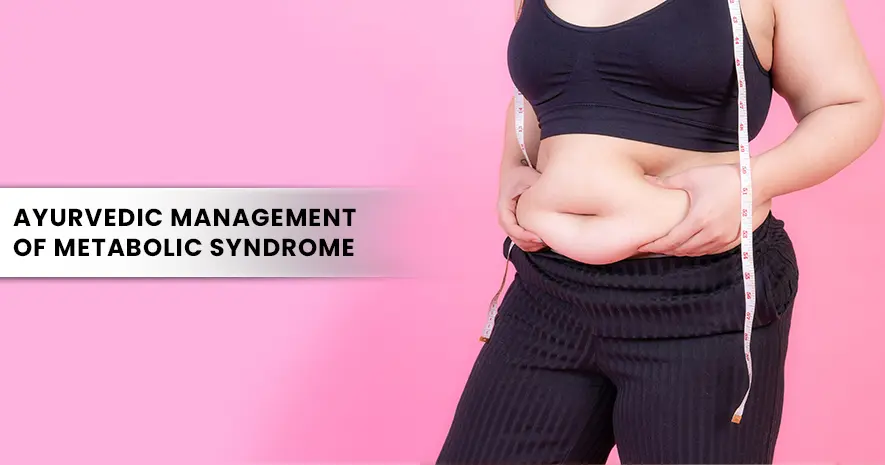
Metabolic Syndrome (MS) is a cluster of conditions including abdominal obesity, high blood pressure, abnormal cholesterol, and high blood sugar that occur together which collectively increase the risk of cardiovascular disease and type 2 diabetes. In Ayurveda, this complex condition is understood as Santarpanjanya Vikaras (disorders of overnutrition) and Medoroga (obesity/dyslipidemia), often closely aligning with Madhumeha (diabetes). The Root Cause of the condition is Mandagni (weakened digestive fire) and Ama (endogenous toxins or metabolic waste). When Agni is impaired, it leads to the formation of Ama which blocks the body's micro-channels (Srotas). This blockage disrupts lipid transportation and tissue metabolism, specifically affecting the Medo Dhatu (adipose tissue). Metabolic Syndrome is fundamentally viewed as a Kapha-predominant state where excess fat and sluggish metabolism prevent the body from processing glucose and lipids efficiently.
Ayurvedic diagnosis emphasizes that every metabolism is different. Systematic reviews have shown that individuals with a Kapha-dominant Prakriti (constitution) are significantly more associated with dyslipidemia, elevated insulin resistance (HOMA-IR), and lower levels of protective adiponectin. Integrating Ayurvedic markers like Prakriti, Agni status, and Ama levels with biomedical biomarkers provides a more comprehensive framework for early risk identification.
The management of MS in Ayurveda involves three main factors: Nidana Parivarjana (avoiding causative factors), Shodhana (detoxification), and Shamana (palliative therapy).

Panchakarma (Detoxification): These bio-purificatory procedures are used to correct metabolism and clear channel obstructions.
Virechana (therapeutic purgation) is highly effective for managing dyslipidemia and removing systemic toxins.
Basti (medicated enemas) helps modulate the gut-brain-metabolic axis and improve insulin sensitivity.
Udwartana (herbal powder massage) and Swedana (steam therapy) are used specifically to reduce fat accumulation and Kapha buildup.
In the management of metabolic syndrome, internal medicines, including both pure herbal drugs and herbo-mineral formulations (Rasaushadhis), are administered according to the specific condition and Prakriti of the patient. Because every metabolism is unique, this personalized approach is essential for achieving a metabolic reset.
This customized treatment fixes the root of the problem, an impaired metabolic fire (Agni) and an imbalanced Kapha. This personalized approach helps for lasting recovery and a better quality of life, without the side effects of long-term drug use.
Q1. Beyond general exercise, what are the specific metabolic benefits of different Yoga asanas for this condition?
Yoga is used as a targeted metabolic stimulant. Ardha Matsyendrasana promotes the proper secretion of insulin to regulate blood sugar. Dhanurasana is specifically used to reduce abdominal fat and improve spinal flexibility. Surya Namaskara is considered a complete metabolic reset because it increases the Agni (digestive fire) required to metabolize excess Medo dhatu (adipose tissue) and clears systemic channels
Q2. How assessing Agni and Ama predicts metabolic risk early and non-invasively?
Ayurvedic markers like Agni and Ama act as a powerful, non-invasive early warning system, often predicting metabolic risks long before they show up on standard routine lab panels. A state of Mandagni (sluggish metabolic fire) correlates significantly with early signs of insulin resistance and impaired glucose metabolism. Similarly, a high Ama status (the accumulation of toxic metabolic by products) shows a strong positive correlation with key systemic inflammatory markers. By evaluating these traditional indicators, clinicians can identify a chronic, silent inflammatory state well before clinical symptoms manifest.
Q3. What role does Srotorodha (channel obstruction) play in MS, and how is it managed?
In Ayurveda, MS involves the accumulation of Ama (toxins) and vitiated Meda (fat), which causes Srotorodha, or the blockage of micro-channels responsible for lipid transportation and tissue metabolism. To manage this, Srotovishodhaka (channel-clearing) therapies such as Virechana (therapeutic purgation) to remove systemic toxins and Udwartana (herbal powder massage) to physically reduce fat accumulation and clear obstructions in the fat-transporting channels (Medovaha Srotas)
October 16, 2026
October 09, 2026

September 24, 2026

September 19, 2026

September 18, 2026

September 03, 2026
We use cookies that are necessary for the smooth operation of the website, to improve our website and to display advertising relevant to you on social media platforms and partner websites. By clicking "Accept all", you agree to the use of cookies for convenience features and statistics and tracking. You can change these settings again at any time. If you do not agree, we will limit ourselves to technically necessary cookies. For more information, please see our privacy policy .