
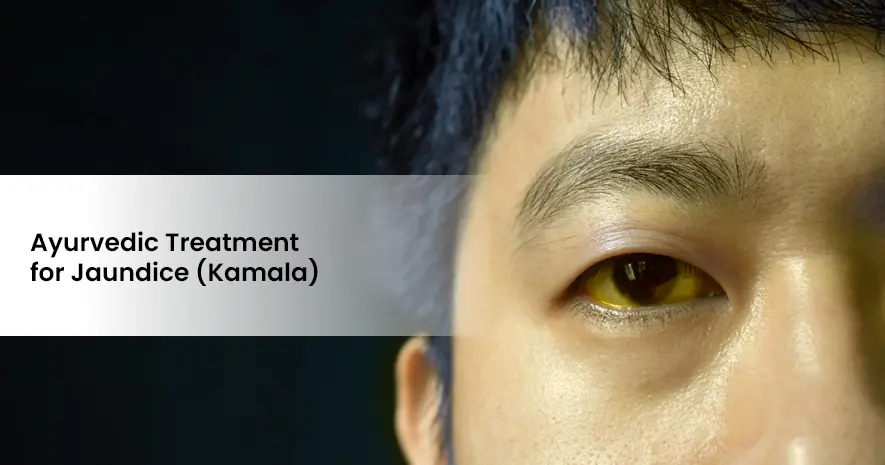
In Ayurveda, jaundice is known as Kamala, a condition primarily viewed as a profound metabolic and hepatobiliary dysfunction. It is characterized by the systemic accumulation of vitiated Pitta, leading to the classic yellowing of the skin, eyes, and mucous membranes. Just from being a localized liver issue, Ayurveda treats Kamala as a systemic humoral imbalance involving the blood-transporting channels (Raktavaha Srotas) and the liver (Yakrit).
The Root Cause and Pathogenesis (Samprapti)
Ayurveda classics explain that Kamala often arises as an advanced stage of Pandu Roga (anemia). If a person suffering from anemia continues to consume Pitta-aggravating diets (spicy, sour, salty) and follows an irregular lifestyle, the aggravated Pitta affects the blood (Rakta) and muscle (Mamsa) tissues. This process impairs liver function, leading to a loss of structural integrity in liver cells and the eventual movement of bile into other channels like the skin and eyes.
Types of Kamala
Diagnosis is crucial for determining the correct treatment protocol. Ayurveda classifies Kamala into two main systemic types:
● Koshthashakhashrita (Bahupitta): A systemic form where there is massive overproduction of Pitta. It parallels hepatocellular or hemolytic jaundice and is characterized by dark yellow or reddish-yellow urine and stools.
● Shakhashrita (Alpapitta): An obstructive form where the biliary path is blocked by deranged Kapha and Vata. A clinical hallmark here is clay-colored or pale stools because bile cannot reach the intestines.
● Kumbha Kamala: An advanced, deep-seated stage that is considered difficult to cure, often involving symptoms like edema and loss of metabolic fire.
Treatment Principles
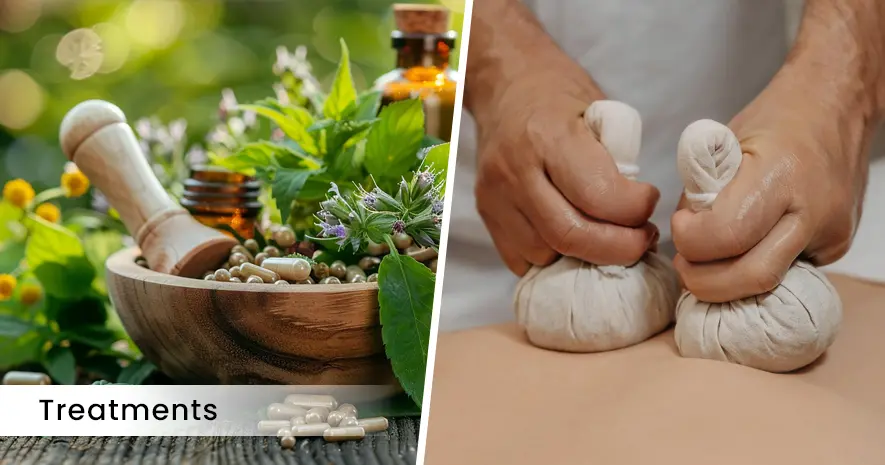
The ultimate goal of Ayurvedic therapy is Dhatu Samya - the restoration of physiological equilibrium. The management follows two main paths: Shodhana (cleansing) and Shamana (palliative) therapies.
1. The importance of Virechana (Purgation)
The main treatment principle mentioned for Kamala is Virechana. Purgation is considered the best therapy for Pitta because it eliminates the excess humor through the gastrointestinal tract.
● Mridu Virechana: For jaundice, a mild (Mridu) approach is required to avoid further weakening the liver.
● Internal Oleation (Snehapana): Before purgation, patients often consume medicated ghee like Mahatikta Ghrita to liquefy toxins and move them to the gut for elimination.
2. Herbs for Liver Health
Ayurveda utilizes several potent herbs to stabilize liver cells:
● Bhumyamalaki (Phyllanthus niruri): The premier herb for hepatic restoration, possessing potent antiviral and bile-purifying properties.
● Katuki (Picrorhiza kurroa): A powerful bitter tonic that stimulates bile secretion and improves bilirubin excretion.
● Guduchi (Tinospora cordifolia): It provides immunomodulatory support and restores vitality.
● Kalmegh (Andrographis paniculata): It is essential for managing liver inflammation and infections.
● Punarnava (Boerhavia diffusa): Vital for managing complications like water retention (edema) and promoting liver cell regeneration.
Diet and Lifestyle:
In Ayurveda, diet (Ahara) is considered "the great medicine". For a liver under stress, the diet must be strictly Pitta-Shamaka (Pitta-pacifying) and Laghu (light).
● Pathya (Wholesome Foods):
- Cereals: Old Shali rice, barley (Yava), and wheat.
- Liquids: Fresh sugarcane juice, providing energy and aiding bilirubin excretion. Coconut water and radish juice also assist in detoxification. Beyond juices, simple boiled and cooled water is essential to help the kidneys flush out the excess water-soluble bilirubin.
- Pulses: Green gram (Mudga) is the protein of choice as it is easy to digest.
● Apathya (To be Avoided):
- Oily, fried, and highly spicy foods burden the liver and worsen Pitta.
- Excessive salt, vinegar, and alcohol are strictly contraindicated.
- Habits like daytime sleep (Divaswapna) and late-night awakening should be avoided as they disturb metabolic rhythms.
Sreedhareeyam approach to treatment
In our hospital, we follow an integrated clinical protocol where we prioritize In-Patient management for close monitoring and systemic detoxification. Our specialized treatment begins with Mridu Virechana (mild therapeutic purgation). This purification phase is systematically followed by a personalized Shamana Chikitsa (internal medications) regimen.
Furthermore, we strictly implement a wholesome diet (Pathya) designed to provide energy through light, digestible proteins that minimize the metabolic burden on the liver. Recovery is monitored through the regular evaluation of subjective symptoms, such as Aruchi (anorexia) and Daurbalya (weakness), in conjunction with Liver Function Tests (LFTs) to confirm a steady decline in bilirubin levels.
Faq(Frequently Asked Question)
1. What causes yellowing of the skin and eyes in Kamala?
Yellowing occurs because of the excessive accumulation of bilirubin (a yellow pigment) in the blood and tissues, which happens when the liver is unable to process or excrete it properly. In Ayurvedic terms, this is caused by highly aggravated Pitta, which enters the circulation and discolors the skin, eyes, and nails.
2. What is the root cause of Kamala/Jaundice according to Ayurveda?
According to Ayurveda, the root cause of Kamala is the profound aggravation of Pitta Dosha, which vitiates the blood (Rakta) and muscle (Mamsa) tissues. It often arises as an advanced stage of Pandu Roga (anemia) when a person continues to follow a Pitta-aggravating diet and irregular lifestyle.
3. What diet is recommended for jaundice in Ayurveda?
The recommended diet is Pitta-pacifying and light, consisting of old Shali rice, green gram, and fresh sugarcane juice to aid bilirubin excretion. You should strictly avoid oily, fried, or spicy foods, along with alcohol and salt.
4. What complications are seen in advanced Kumbha Kamala?
In advanced Kumbha Kamala, complications include deep-seated edema (swelling) and a significant loss of metabolic fire. It is considered a difficult-to-cure stage where the liver's structural integrity is severely impaired.
May 30, 2026
May 26, 2026

May 18, 2026
May 05, 2026
April 30, 2026
April 22, 2026
April 20, 2026
April 17, 2026
March 30, 2026

March 25, 2026

March 20, 2026
We use cookies that are necessary for the smooth operation of the website, to improve our website and to display advertising relevant to you on social media platforms and partner websites. By clicking "Accept all", you agree to the use of cookies for convenience features and statistics and tracking. You can change these settings again at any time. If you do not agree, we will limit ourselves to technically necessary cookies. For more information, please see our privacy policy .