
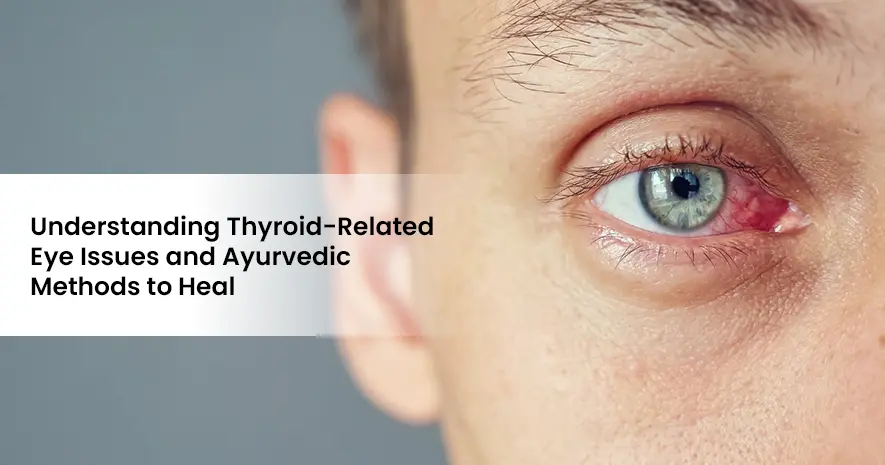
Thyroid health and vision are more closely connected than most people know. Thyroid-associated ophthalmopathy (TAO) - often called Thyroid Eye Disease (TED) or Graves’ Orbitopathy- is an inflammatory condition that affects the tissues and muscles around the eyes due to thyroid dysfunction. Most often it is linked to Graves’ disease (an autoimmune form of hyperthyroidism). But it can also appear in people with Hashimoto’s thyroiditis or other benign thyroid conditions.
Common Symptoms of Thyroid-Related Eye Issues
Studies show that nearly 70% of people with thyroid conditions face some kind of eye trouble. The main symptoms to watch for are:
- Watery or tearing eyes (this is especially common in men)
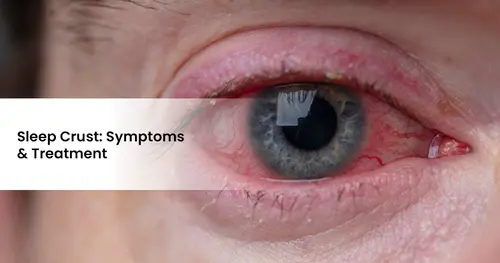
- Bulging eyes (proptosis), which is a clear sign of Graves’ disease
- Swelling or bags under the eyes and puffy eyelids
- A gritty or sandy feeling under the eyelids, often due to dry eyes
- Double vision and sensitivity to bright light
- Pain or pressure felt behind the eyeballs
These eye issues can significantly impact a person's quality of life, leading to increased anxiety, depression, and difficulties in daily activities.
The Ayurvedic View: Doshas and Agni
In Ayurveda, thyroid- related eye problems are seen as an imbalance in the body’s natural energies (called doshas) and the digestive fire (Agni). The condition is often linked to goiter (Galaganda), excessive digestive fire (Atyagni), and extreme emaciation (Ati Karshya).
Pathologically, thyroid eye problems typically involve:
- Vata and Pitta Vridhi: Increase in Vata and Pitta doshas
- Kapha Kshaya: Decrease in Kapha dosha
- Tissue Deposits: Build-up of certain tissues behind the eyeball. Ayurveda suggests that, these deposits can be cleared with medicines that have a “cutting” or “scraping” action.

Ayurvedic Methods to heal
In Sreedhareeyam, we focus on a holistic approach that includes internal medication, external applications, and specialized therapies to normalize thyroid function and relieve eye pressure.
Shothahara (Anti-inflammatory) Therapy - Since swelling and inflammation are the main problems, Shothahara treatments are vital. Kanchanara Guggulu is frequently used because it helps shrink growths and swellings like goiter and orbital deposits. Punarnavadi Kwatha and Varanadi Kwatha are also given to reduce puffiness and bring down eye pressure.
Vata-Pitta Shamaka and Brimhana (Nourishing) Therapy - Shatavari and Yashtimadhu are highly recommended for their Vata-Pitta pacifying properties. Research shows Shatavari can help lower T3 and T4 hormone levels, while Yashtimadhu supports healthy thyroid function and works as a natural anti-inflammatory.
Nasya (Nasal Administration) - Marsha Nasya means administration of medicated oils through the nostrils. It is very effective for ‘Urdhwajatrugata Vikaras’ (diseases above the neck). Kshirabala Taila can be used for performing Nasya. It gently stimulates the olfactory bulb, which in turn influences the hypothalamus and pituitary glands to help regulate the endocrine system and bring thyroid levels back to normal.
External Applications - For localized relief of neck swelling or eye discomfort, Shothaghna Lepa (a medicinal paste) may be applied externally.
Ayurveda provides a safe and cost-effective alternative that seeks to fix the root cause of autoimmune thyroid issues without the necessity for lifelong medication in all cases.
July 17, 2026

July 14, 2026
July 09, 2026
June 18, 2026

June 08, 2026
June 04, 2026
June 04, 2026
May 30, 2026
May 18, 2026
May 05, 2026

April 30, 2026
We use cookies that are necessary for the smooth operation of the website, to improve our website and to display advertising relevant to you on social media platforms and partner websites. By clicking "Accept all", you agree to the use of cookies for convenience features and statistics and tracking. You can change these settings again at any time. If you do not agree, we will limit ourselves to technically necessary cookies. For more information, please see our privacy policy .