
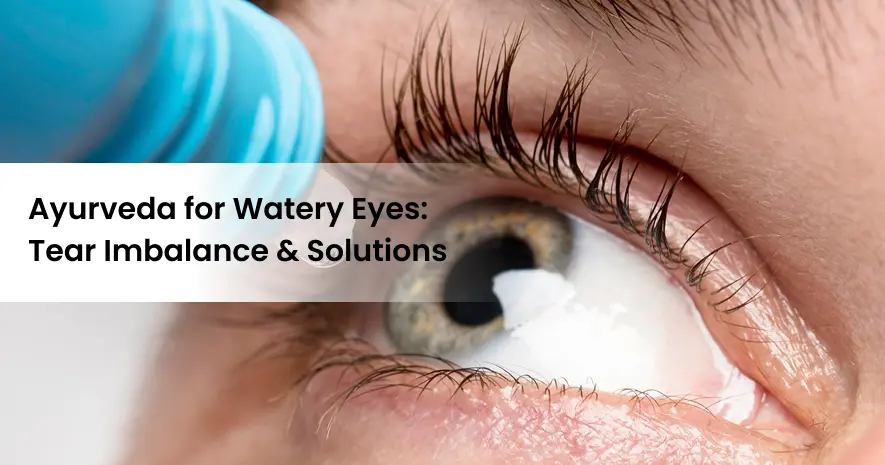
In the clinical landscape of ophthalmology, few conditions are as paradoxical as the "watery dry eye." Patients often present with a frustrating cycle: eyes that feel perpetually gritty and parched, yet frequently overflow with tears. To understand this, we must look beyond the surface level of moisture and examine the complex biochemistry of the ocular surface.
The Science of the Tear Film: Why "Wet" Can Still Be "Dry"
The human tear film is not merely water; it is a sophisticated, three-layered shield designed to maintain ocular health.
1. The Lipid (Oily) Layer: Secreted by the meibomian glands, this outer layer prevents the evaporation of tears.
2. The Aqueous (Watery) Layer: Produced by the lacrimal glands, it provides nutrients and oxygen to the cornea. It is essential to maintain the health of the ocular surface. It also helps to remove the debris and toxins from eyes.
3. The Mucin Layer: This inner layer ensures tears "stick" to the surface of the eye. They increase the surface tension and thus the stability of tear film.
When the lipid layer is deficient—a condition known as Meibomian Gland Dysfunction (MGD)—the aqueous tears evaporate at an accelerated rate. This leaves the corneal nerves exposed, sending an emergency "distress signal" to the brain. In response, the lacrimal gland floods the eye with reflex tears.
Because these reflex tears are missing the stabilizing oils and mucins of healthy basal tears, they have high surface tension and low viscosity. They simply "bead up" and roll down the cheek (epiphora) without actually lubricating the eye. The result is a persistent state of inflammation and desiccation despite the visible overflow.
Shushkakshipaka: The Ayurvedic Pathophysiology
Ayurveda classifies this imbalance under Shushkakshipaka (Dry Eye Syndrome). From a doshic perspective, it is a classic manifestation of Vata and Pitta vitiation:
● Vata Vitiation: Leads to Rukshata (dryness), Kharatva (roughness), and the sensation of a foreign body (Toda).
● Pitta Vitiation: Causes Daha (burning), Paka (inflammation), and redness.
● Dhatu depletion: Specifically, the depletion of Rasa Dhatu (plasma/nourishing fluid) leads to a failure in the eyes' ability to maintain their natural Sneha (viscosity/oiliness).
The Sreedhareeyam Approach: Precision Netra Chikitsa
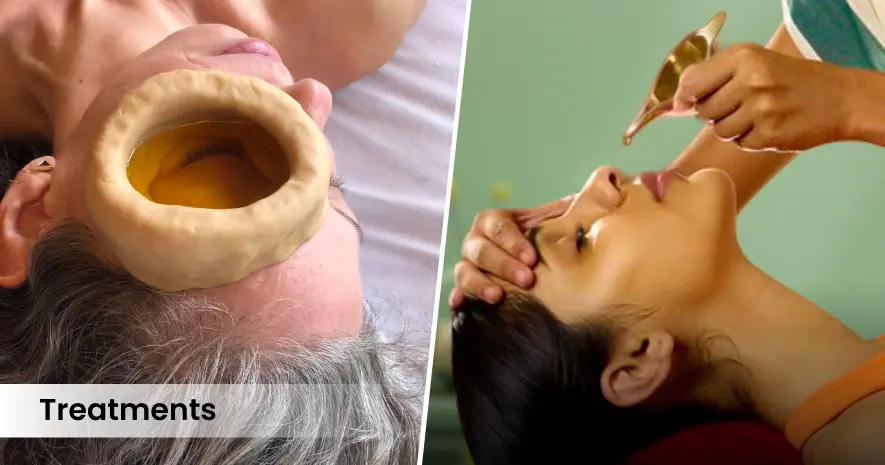
Sreedhareeyam Ayurvedic Eye Hospital has pioneered an integrative model that utilizes modern diagnostic markers—such as Dry eye evaluation which comprises Tear Film Break-Up Time (TFBUT), Tear Quantity (Tear Height), Tear Quality (Lipid Layer), Meibomian Glands, Eyelid Edge and Redness and Schirmer’s tests—to validate traditional Ayurvedic recovery. Their approach to watery eyes is not merely palliative but restorative.
1. Targeted Diagnostic Mapping
Sreedhareeyam specialists use advanced imaging to determine if the epiphora is due to Reflex Tearing (Ocular Surface Disease) or Obstructive Epiphora (blockage in the nasolacrimal duct). This ensures the treatment targets the root cause—whether it is an inflammatory process or a physical drainage issue.
2. Specialized Treatment Protocols for Dry/Watery Eyes
● Netra Tarpana (Lipid Replenishment): This is the cornerstone of Sreedhareeyam’s dry eye protocol. Medicated ghee, such as Jeevantyadi Ghrita, is retained over the eyes. The lipid-rich nature of the ghee directly reinforces the deficient lipid layer of the tear film, reducing evaporation and halting the reflex tearing cycle.
● Nethra Seka & Aschyotana: Specialized herbal decoctions are used to "wash" the inflammatory cytokines off the ocular surface, immediately soothing the Pitta aggravation.
● Nasya (Neuro-Lachrymal Stimulation): Administering Anu Taila via the nasal route stimulates the Urdhwa Jatrugata nerves, helping to regulate the autonomic signals to the lacrimal glands.
3. Proprietary Formulations
Sreedhareeyam provides evidence-based herbal solutions that serve as sterile alternatives to synthetic lubricants:
● Sunetra: These sterile eye drops are formulated to match the physiological pH of human tears. They contain botanicals like Tulsi and Jati which act as natural anti-inflammatories, reducing the corneal irritation that triggers watery eyes.
● Sreedhareeyam Eyeplus
Conclusion: Restoring Balance
Watery eyes are a symptom of a deeper homeostatic failure. By combining the precision of modern diagnostics with the profound "bio-mimicry" of treatments like Tarpana, Sreedhareeyam offers a sustainable solution that moves beyond temporary "artificial tears" to restore the eye's natural, self-sustaining moisture.
October 16, 2026
October 09, 2026
September 24, 2026

September 19, 2026

September 18, 2026
September 03, 2026
We use cookies that are necessary for the smooth operation of the website, to improve our website and to display advertising relevant to you on social media platforms and partner websites. By clicking "Accept all", you agree to the use of cookies for convenience features and statistics and tracking. You can change these settings again at any time. If you do not agree, we will limit ourselves to technically necessary cookies. For more information, please see our privacy policy .