
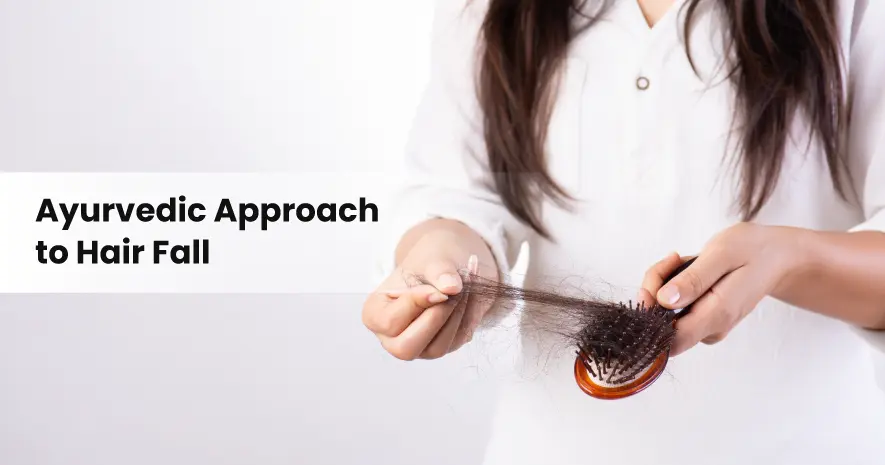
Hair is often regarded as a defining feature of one’s appearance, influencing self-confidence and social interactions. Beyond its aesthetic role, hair serves a biological function, providing insulation to the scalp, protecting it from environmental pollutants, and signaling overall health. However, excessive hair fall—whether gradual thinning, patchy baldness, or complete loss—can be distressing and indicative of deeper physiological imbalances.
alopecia as a complex condition influenced by genetic, hormonal, nutritional, environmental, and psychological factors. Conventional treatments often focus on topical applications, medications, and surgical interventions. Ayurveda, however, offers a holistic perspective, classifying hair fall under Siroroga (diseases of the head) and Kshudra Roga (minor ailments) and correlating it with Khalitya (gradual thinning) and Indralupta (patchy hair loss). Rooted in the Tridosha theory, Ayurveda attributes hair fall primarily to Pitta Dosha aggravation, along with imbalances in Vata and Kapha, leading to poor follicular nourishment, inflammation, and weakened scalp health.
Hair fall is driven by a variety of intrinsic and extrinsic factors, which Ayurveda classifies under Nidana (causative factors). These factors disrupt the balance of Vata (responsible for movement and dryness), Pitta (linked to heat and metabolism), and Kapha (governing nourishment and moisture), ultimately leading to hair loss.
1. Genetic Factors and Androgenic Alopecia
A significant percentage of hair loss cases stem from hereditary factors, commonly known as androgenic alopecia. This condition arises from genetic sensitivity to dihydrotestosterone (DHT), which shrinks hair follicles over time, causing progressive thinning. Ayurveda attributes hereditary hair loss to Sahaja Prakriti (innate constitution) but emphasizes that the progression can be moderated through dietary and lifestyle interventions that balance Pitta and strengthen Asthi Dhatu (the tissue responsible for hair and bone health).
2. Hormonal Imbalances and Endocrine Disorders
Hair follicles are highly responsive to hormonal changes, making conditions such as pregnancy, postpartum hormonal shifts, menopause, polycystic ovarian syndrome (PCOS), and thyroid dysfunction major contributors to hair fall. Elevated levels of cortisol (the stress hormone), estrogen fluctuations, and thyroid hormone imbalances disrupt hair growth cycles, leading to excessive shedding. Ayurveda correlates these hormonal shifts with Pitta and Rakta Dushti (impure blood circulation), which affect scalp health and weaken hair roots.
3. Nutritional Deficiencies and Digestive Weakness
Hair is composed primarily of keratin, a protein that requires a steady supply of iron, zinc, vitamin D, biotin, omega-3 fatty acids, and amino acids for optimal growth. Deficiencies in these nutrients can cause brittle, thinning hair. Ayurveda links poor nutrient absorption to weak Agni (digestive fire), leading to malabsorption and accumulation of Ama (toxins). This condition affects Rasa Dhatu (the primary tissue responsible for nutrient distribution) and Asthi Dhatu, weakening the hair.
4. Stress-Induced Hair Loss and the Role of the Mind
Chronic stress significantly impacts hair health by triggering telogen effluvium, a condition where excessive hair strands enter the resting phase prematurely. Stress elevates cortisol levels, restricting blood flow to the scalp and disrupting follicular activity. Ayurveda identifies stress-induced hair fall as Vata aggravation, where Prana Vayu (the energy governing mental activity) disturbs hair’s nourishment, leading to premature shedding and greying.
5. Scalp Infections and Microbial Imbalances
Conditions such as dandruff (seborrheic dermatitis), ringworm (tinea capitis), and bacterial infections create an unfavorable scalp environment that weakens hair follicles. Ayurveda attributes microbial overgrowth to Kapha and Pitta imbalances, where excessive moisture and heat facilitate infection. Proper scalp hygiene and the use of herbal antiseptics help in maintaining a healthy scalp microbiome.
6. Environmental and Lifestyle Factors
Excessive exposure to pollution, chemically treated water, heat styling tools, harsh shampoos, and hair dyes damages the scalp and weakens the hair shaft. Additionally, improper washing habits, excessive oil buildup, and the use of synthetic hair products contribute to follicular congestion. Ayurveda considers these external triggers as Agantuja Hetu (external disease factors), which disturb the natural doshic balance and contribute to hair fall.
Types of Hair Fall:
Hair loss manifests in different forms, classified under both Ayurvedic and dermatological systems:
Scarring Alopecia (Cicatricial Hair Loss): This form of hair loss results from inflammation that destroys follicles and replaces them with scar tissue, making regrowth impossible. Ayurveda attributes this to Pitta and Rakta Dushti, where excessive heat and inflammation damage scalp tissue.
Non-Scarring Alopecia: This category includes reversible forms of hair loss such as:
-Androgenic Alopecia: Genetic thinning of hair linked to Pitta imbalance and hormonal fluctuations.
-Alopecia Areata: Autoimmune hair loss caused by Vata-Pitta aggravation, leading to follicular inflammation.
-Traction Alopecia: Hair loss due to physical strain on the follicles from tight hairstyles or extensions.
-Tinea Capitis: Fungal infection resulting in patchy hair loss, commonly due to Kapha-Pitta imbalance.
Treatment for Hair Fall
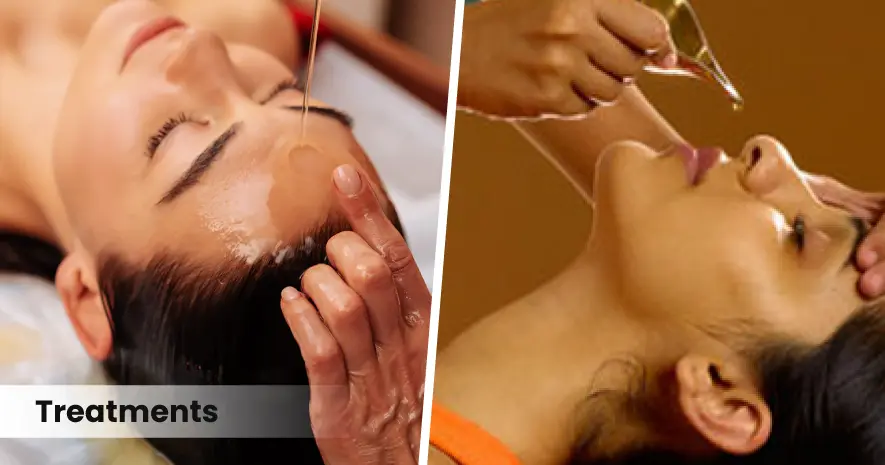
Ayurveda employs a dual approach to treating hair fall: Shodhana Chikitsa (detoxification) to eliminate toxins and Shamana Chikitsa (palliative care) to nourish the scalp and strengthen hair follicles.
1. Detoxification Therapies (Shodhana Chikitsa)
- Virechana (Purgation Therapy): This process eliminates excess Pitta from the body, reducing inflammation and balancing hormones.
- Nasya (Nasal Therapy): Administering Anu Taila, Brahmi Ghrita, or Jeevaneeya Gana Taila through the nostrils helps nourish the scalp and enhances hair growth.
- Jaloukavacharana (Leech Therapy) and Prachana Karma (Bloodletting Therapy): These therapies remove impurities from the blood, improving scalp circulation and reducing hair fall.
2. Rejuvenation and Scalp Nourishment (Shamana Chikitsa)
Shiro Abhyanga (Scalp Massage): Using medicated oils like Bhringraj Taila, Prapaundareekadi Taila, and Neelibringadi Taila strengthens follicles and promotes hair growth.
Shirodhara: A steady stream of warm oil on the forehead relieves stress-induced hair fall by calming the nervous system.
Shiro Lepa (Herbal Hair Masks): Herbal pastes containing Amla, Bhringraj, Brahmi, Gunja, and Hibiscus rejuvenate the scalp and stimulate growth.
Diet and Lifestyle for Hair Health
Ayurveda emphasizes Ahara (diet) and Vihara (lifestyle) as fundamental pillars of hair health:
- A diet rich in leafy greens, legumes, nuts, dairy, and whole grains ensures adequate iron, vitamins, and proteins for hair nourishment.
- Hydration is essential to maintain scalp moisture and prevent dryness.
- Avoidance of spicy, fried, and processed foods helps reduce Pitta-related inflammation.
- Proper sleep (6–8 hours) supports the body’s natural regeneration process.
- Yoga postures like Sarvangasana, Vajrasana, and Dhanurasana improve circulation to the scalp, while Pranayama techniques (Nadi Shodhana, Anulom Vilom) help in stress management.
Hair fall is not merely a cosmetic issue but a reflection of internal health imbalances. Ayurveda provides a holistic, sustainable approach by addressing root causes, detoxifying the body, and strengthening hair follicles through natural therapies, dietary interventions, and lifestyle adjustments.
October 26, 2026
October 22, 2026
October 16, 2026
October 09, 2026
September 24, 2026
September 19, 2026

September 18, 2026
September 03, 2026
August 22, 2026
August 19, 2026
August 11, 2026
August 06, 2026
We use cookies that are necessary for the smooth operation of the website, to improve our website and to display advertising relevant to you on social media platforms and partner websites. By clicking "Accept all", you agree to the use of cookies for convenience features and statistics and tracking. You can change these settings again at any time. If you do not agree, we will limit ourselves to technically necessary cookies. For more information, please see our privacy policy .