
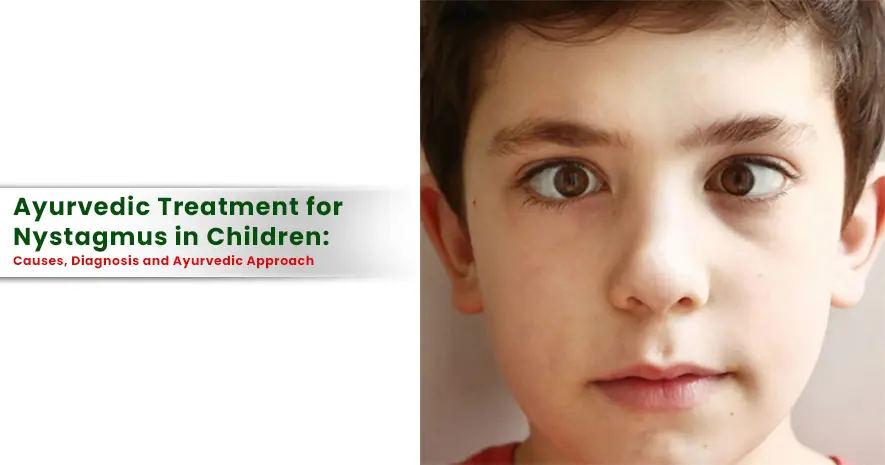
Nystagmus, is a complex ocular motor disorder characterized by involuntary and repetitive movements of one or both eyes. In children, it is often referred to as “dancing eyes” and can significantly affect vision, depth perception, balance, and coordination. These oscillations can that occur horizontally, vertically, or in a circular pattern making the child to control their eye movements and affect the gazing.
Causes of Nystagmus:
Congenital/Infantile Nystagmus: It is often idiopathic, it can also be linked to genetic factors and other eye conditions such as albinism, optic nerve hypoplasia, or congenital cataracts. In case of muscular or neurological delay or lack of normal eye movement control development can lead to congenital nystagmus
Acquired Nystagmus: It is usually from underlying health issues affecting the brain, inner ear. These can include neurological disorders, head injury, stroke, certain infections, or even some types of tumours. Certain medications and substance or drug use can also lead to Nystagmus. Deficiency in vitamins like Vit B-12, thiamine can also cause nystagmus.
Symptoms of Nystagmus:
- Involuntary eye ball movements
- Difficulty in Gazing
- Photosensitivity
- Postural Issues of head
- Coordination issues
According to Ayurveda, Nystagmus can happen due to aggravated vata dosha when disturbed and get lodged in eyes and muscles around eyes and causes symptoms like the unstable ocular movements and causing uncontrolled twitching.
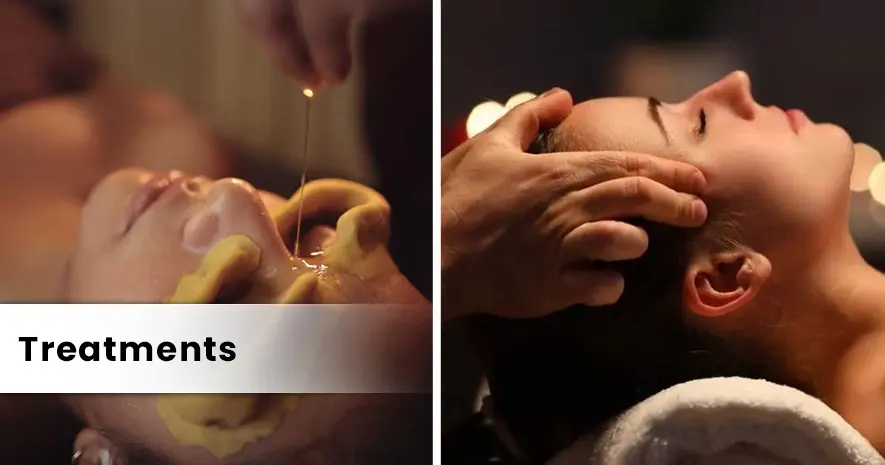
Ayurvedic Approach
Sreedhareeyam considers nystagmus beyond ophthalmic care. Our aim is not just to stop movement of eye; it is to calm the vata, the nervous system, and deeply nourish the muscles. It is acquired through approach focusing on deep relaxation, and gentle nourishment. This is achieved through a combination of localized eye therapies (Kriyakalpa) and systemic treatments like Shodhana and Samana.
Systemic Treatmens:
Samana therapy: Internal medications to pacify vata and improve the nourishment,
It includes internal medications like Kashaya, Tablets, Snehapana , Sirodhara, HastaPadabhyanga, Rasayana
Shodhana therapy:
The purificatory therapies like Snigdha Virechana, Nasya karma, matra vasthy.
Kriyakalpas like:
Netra seka, Aschyotana, bidalaka, pichu, Drishtiprasanana, netra tarpana and pushpabandhana etc.
Ayurvedic therapies to calm the nervous system—we can reduce eye fatigue, improve visual clarity. Along with the treatments, Yoga and meditation also shows good result in nystagmus.
Specialized eye exercise, tradaka can also help in improving the ocular health. Regular yoga, pranayama, and dietary modifications support long-term management of the condition. Age appropriate treatments with appropriate medications are to be performed under a qualified Ayurvedic physician.
FAQ
1. Why do people with nystagmus often tilt their heads?
Children with nystagmus often turn their heads to find angle, natural adaptation where their involuntary eye movements keeps the image steady on the retina and make the vision clear. Head tilt should not be discouraged or forced into a "straight" position. Forcing a child to straighten their head usually just makes their vision blurry.
2. What are the main symptoms of nystagmus?
- Involuntary eye ball movements
- Blurring of vision
- Difficulty in Gazing
- Photosensitivity
- Postural Issues of head
- Coordination issues
3. Do people with nystagmus see the world as shaking?
While children born with nystagmus typically do not perceive the world as shaking, adults or older children who acquire nystagmus later in life often feel as though their surroundings are moving or "shaking". This perception of visual motion is clinically known as oscillopsia.
4. Can we cure nystagmus?
In children nystagmus is manageable but chronic condition requiring comprehensive care. Ayurveda offers valuable treatment options focusing on vata dosha balance. However, complete cure may not be possible, but significant improvement can be achieved.
July 28, 2026
July 17, 2026
July 14, 2026
July 09, 2026
June 18, 2026
June 08, 2026
June 04, 2026
June 04, 2026
May 30, 2026
May 26, 2026
May 18, 2026
We use cookies that are necessary for the smooth operation of the website, to improve our website and to display advertising relevant to you on social media platforms and partner websites. By clicking "Accept all", you agree to the use of cookies for convenience features and statistics and tracking. You can change these settings again at any time. If you do not agree, we will limit ourselves to technically necessary cookies. For more information, please see our privacy policy .