

The month of Karkkidakam, also revered as Ramayana Masam in Kerala, holds profound cultural, spiritual, and medicinal significance. Traditionally observed between mid-July and mid-August, this period coincides with the monsoonal downpour that defines the Varsha Ritu—the rainy season in Ayurvedic seasonal classification. This month is not only marked by introspection and ritual observances but also presents a critical opportunity for preventive and promotive healthcare, guided by the principles of Ayurveda.
In the classical Ayurvedic framework, the year is divided into six Ritus or seasons: Shishira, Vasanta, Grishma, Varsha, Sharad, and Hemanta. Among these, Varsha Ritu is considered physiologically challenging, as the atmosphere becomes heavy with moisture, the sun’s potency is diminished, and digestion weakens considerably. The internal strength of the body, or Bala, also declines, predisposing individuals to a range of disorders, especially those influenced by Vata dosha. Joint pain, muscle stiffness, generalized weakness, digestive disturbances, and respiratory conditions become more prominent. This physiological vulnerability demands a strategic approach to health management—what Ayurveda describes as Karkkidaka Charya (seasonal regimen) and Karkkidaka Chikitsa (seasonal therapies).
During this season, all three doshas—Vata, Pitta, and Kapha—tend to become destabilized due to the erratic weather, but Vata predominance usually takes center stage. In addition, diminished digestive fire (Agni) hinders the proper assimilation of nutrients, causing the accumulation of Ama (metabolic toxins). The goal of seasonal care during this period is to restore digestive strength, enhance immunity, and eliminate the accumulated doshas through dietary, behavioral, and therapeutic interventions.
One of the primary dietary principles during this month is the consumption of warm, light, easily digestible food that supports digestive function. Ingredients such as ginger, garlic, cumin, dried coriander, rock salt, and ghee are commonly recommended for their ability to ignite Agni and clear Ama. Conversely, fried foods, refrigerated leftovers, refined flour-based dishes, and those rich in spices or sourness should be avoided. Food should be freshly cooked and consumed warm. Drinking water should always be boiled, preferably infused with herbs like jeeraka (cumin), shunti (dry ginger), tulsi (holy basil), or dhanyaka (coriander), which act as digestive stimulants and mild detoxifiers.
Daily self-care practices are also vital during this period. Abhyanga, the practice of oil massage using warm medicated oils, is highly recommended to pacify aggravated Vata and restore strength to muscles and joints. This is usually followed by a warm water bath. Gentle physical activity, including yoga and pranayama, enhances circulation, maintains flexibility, and supports respiratory and mental health, which are often challenged during rainy seasons due to humidity and inertia.
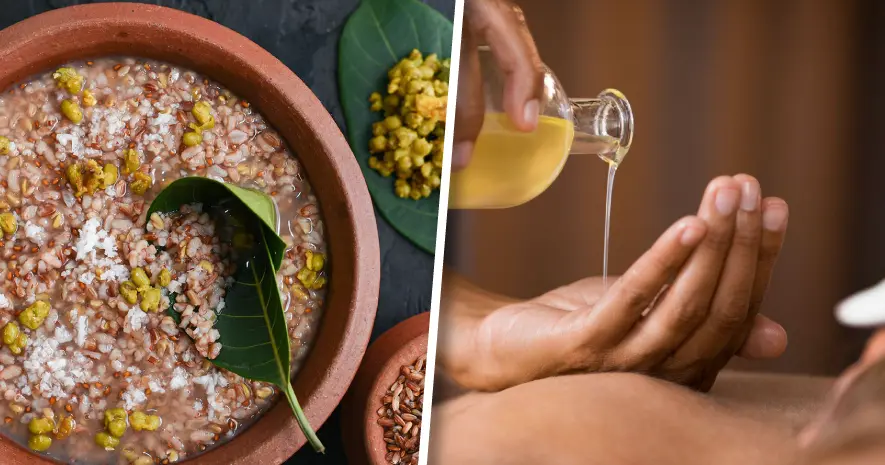
A central culinary and therapeutic preparation during Karkkidaka is the Karkkidaka Kanji, a medicinal porridge made with specific herbal and nutritional ingredients. Typically prepared using Njavara rice—a highly nutritious, therapeutic rice variety—cooked in decoction made from Pathimugham (Caesalpinia sappan) and enhanced with a blend of powdered medicinal herbs such as methi (fenugreek), shunti (dry ginger), jeeraka (cumin), asali (garden cress), tila (sesame), and haridra (turmeric). Coconut milk and a small quantity of ghee are often added at the final stage of preparation for additional nourishment and flavor. In diabetic individuals, jaggery is usually omitted, and alternate grains like millet or barley can be used to customize the preparation to their metabolic needs. This porridge acts as both food and medicine, offering digestive support, immune modulation, and rejuvenation over a span of 7, 14, 21, or even 28 days depending on the individual’s health status and preference.
Another widely consumed health-promoting formulation during this season is Mukkudi—a polyherbal fermented drink traditionally mixed with buttermilk. The formulation typically includes Mandukaparni (Centella asiatica), Changeri (Oxalis corniculata), Kutaja beeja (Holarrhena antidysenterica), Pippali (long pepper), Jeeraka (cumin), Dhanyaka (coriander), Shunti, and Haridra. Mukkudi is primarily known for its digestive, anti-inflammatory, and immunomodulatory properties, making it an effective tool against monsoon-induced gut-related ailments and allergic tendencies.
Another hallmark of Karkkidaka Charya is the preparation and consumption of Pathila Thoran, a stir-fry made from a specific set of ten leafy greens traditionally foraged during this season. These leaves vary by region but commonly include spinach (cheera), Ceylon spinach (sambar cheera), colocasia leaves (thalu), sickle senna (takara), punarnava, elephant yam leaves (chenayila), long bean leaves (payarila), ash gourd leaves (ilavan ila), pumpkin leaves (mathan ila), stinging nettle (choriyanam), neyyurni (Diplocyclos palmatus), cucumber leaves (vellariyila), and ivy gourd leaves (koval ila). These greens are packed with iron, calcium, magnesium, fiber, and a range of vitamins such as A, C, and K, and are known for their antioxidant, hepatoprotective, anti-inflammatory, and adaptogenic effects. They not only enhance digestion and immunity but also offer targeted support for blood purification, eye health, joint comfort, and skin rejuvenation.
In terms of therapeutic interventions, Ayurveda recommends external therapies during this month for enhanced rejuvenation. Abhyanga or oil massage continues to be the primary line of external therapy, especially when combined with Pizhichil (warm oil pouring), Kizhi (herbal poultice), Udwarthanam (dry powder massage), and Thalapothichil (herbal head pack). These therapies reduce inflammation, restore musculoskeletal balance, and promote detoxification through sweat and lymphatic drainage.
The monsoon season is also considered an ideal time for Panchakarma—Ayurveda’s classical fivefold detoxification regimen. During Karkkidaka, Vata tends to dominate the doshic landscape, making Vasti (medicated enemas) particularly suitable. This therapy helps in nourishing Asthi (bone), Majja (nervous tissue), and Vata itself. In patients who undergo Poorvakarma (preparatory procedures including oleation and fomentation), Panchakarma treatments such as Virechana (purgation), Vamana (emesis), Nasya (nasal cleansing), and Basti are administered based on their constitution (prakriti) and presenting conditions. Among these, Vasti is most emphasized during Varsha Ritu due to its capacity to balance Vata and support long-term wellness.
In summary, Karkkidaka Charya and Karkkidaka Chikitsa represent a powerful blend of seasonal wisdom and therapeutic precision, deeply rooted in Ayurveda’s understanding of ecological and biological rhythms. This regimen is not merely curative but essentially preventive and restorative. By aligning diet, daily routines, herbal therapies, and detoxification practices with the unique demands of the Varsha Ritu, individuals can preserve immunity, enhance longevity, and maintain doshic harmony. In an era increasingly disconnected from nature’s cycles, revisiting these traditional practices offers a scientifically relevant and spiritually enriching blueprint for holistic health.

October 16, 2026

October 09, 2026

September 24, 2026

September 19, 2026

September 18, 2026

September 03, 2026
We use cookies that are necessary for the smooth operation of the website, to improve our website and to display advertising relevant to you on social media platforms and partner websites. By clicking "Accept all", you agree to the use of cookies for convenience features and statistics and tracking. You can change these settings again at any time. If you do not agree, we will limit ourselves to technically necessary cookies. For more information, please see our privacy policy .