
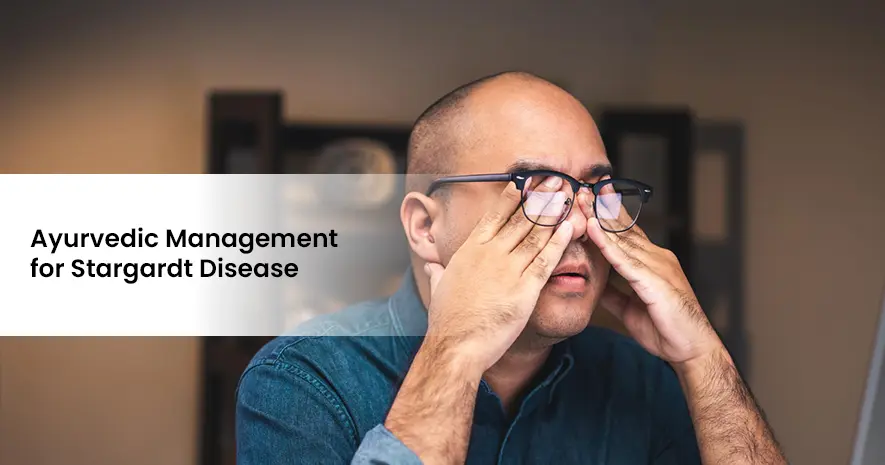
Stargardt disease, also known as Stargardt macular dystrophy, is a rare inherited eye disorder that causes progressive vision loss. Typically diagnosed in childhood, adolescence, or early adulthood, it specifically affects the macula—the small central area of the retina responsible for sharp, straight-ahead vision. The condition is caused by a genetic mutation that leads to the buildup of a fatty waste material called lipofuscin on the macula. As this material accumulates, individuals may experience blurred vision, dark spots in the center of their visual field, color vision deficits, and increasing difficulty with detailed tasks like reading or recognizing faces. While modern medicine currently focuses on low-vision aids and lifestyle adjustments to slow progression, Ayurveda aims for supportive care and management.
Ayurvedic Perspective
In Ayurveda, the eyes are considered a primary site of Pitta dosha, specifically a sub-dosha called Alochaka Pitta, which governs visual perception, light processing, and color. Additionally, the optic nerve and the movement of visual signals are governed by Vata dosha.
Degenerative eye conditions like Stargardt disease are generally viewed through the lens of a severe Vata and Pitta imbalance that leads to the depletion of Rasa and Rakta Dhatu tissues nourishing the eyes. Because it is a genetic condition (classified under Sahaja or hereditary disorders in Ayurveda), the goal of Ayurvedic treatment is not to promise a "cure" for the genetic mutation, but rather to serve as a supportive therapy. The aim is to slow the degeneration, nourish the optic nerves, clear metabolic toxins (Ama), and maximize the function of the remaining healthy retinal cells.
Signs and Symptoms
The progression of Stargardt disease can vary significantly from person to person, but the initial signs typically emerge in childhood, adolescence, or young adulthood. One of the most common early symptoms is a gradual decline in central visual acuity, usually affecting both eyes simultaneously. People might first notice that reading text, recognizing familiar faces, or adjusting from bright to dim light has become increasingly difficult. As the condition advances, there might be development of blind spots or dark areas called scotomas directly in the center of the visual field. Additionally, color vision often becomes impaired, making it harder to distinguish between certain hues. It is important to note that while central vision is severely impacted, peripheral (side) vision almost always remains intact.
Management of Stargardt Disease in Sreedhareeyam
In Sreedhareeyam, we utilize a comprehensive, multi-pronged strategy. Treatment mainly depends on a synergistic combination of Panchakarma (systemic detoxification), Netra Kriyakalpa (specialized localized treatments for the eyes), specific therapies for the head, alongside targeted internal medicines and Rasayana (rejuvenation therapy). Some of the most common therapies recommended include:
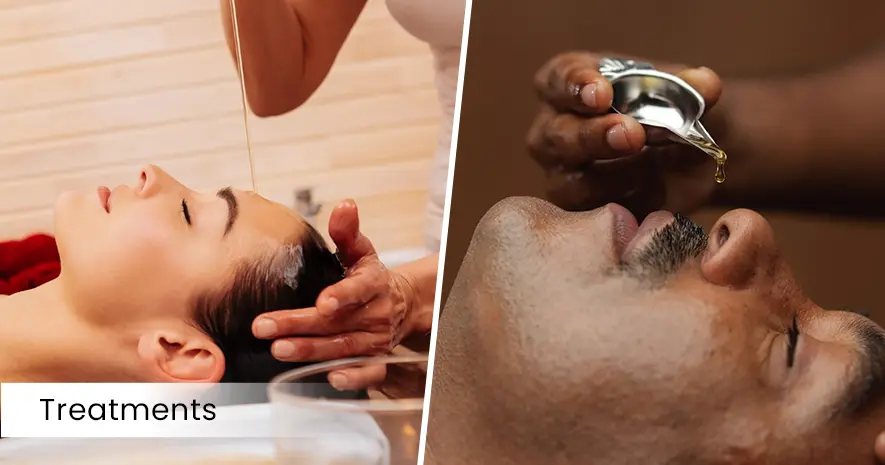
- Tarpana: This is one of the most deeply nourishing treatments for the eyes. A dough ring is placed around the eye socket, and lukewarm, medicated Ghee (clarified butter) is gently poured in. The patient blinks in the ghee, allowing the herbal properties to deeply penetrate, cool, and nourish the dry, degenerating tissues of the macula.
- Nasya: Since the nose is considered the gateway to the brain and head, Nasya involves administering medicated herbal oils into the nasal passages. This helps clear blockages, balance Vata in the head, and strengthen the optic nerve.
- Shirodhara: A continuous, rhythmic pouring of warm herbal oil over the forehead. While it doesn't treat the eye directly, it deeply calms the nervous system, reduces stress (which can exacerbate vision issues), and promotes better circulation to the head.
- Thalam: This involves retaining therapeutic herbal paste along with medicated oil on the crown of the head. It is highly effective for cooling the body, pacifying aggravated Pitta and Vata, and directly nourishing the brain and optic nerves.
- Thalapothichil: A specialized, deeply soothing treatment where the entire head is covered with a thick layer of medicinal paste and wrapped in plantain leaves. It is excellent for reducing severe stress, calming the central nervous system, and addressing degenerative conditions of the head and sensory organs.
Diet and Lifestyle Adjustments
Ayurveda places massive importance on daily habits (Dinacharya). We usually provide a pitta pacifying diet to the patients. Unlike other retinal conditions, patients with Stargardt disease should strictly avoid a high intake of Vitamin A. Because the genetic mutation prevents the proper metabolism of Vitamin A, excess amounts actually accelerate the buildup of toxic lipofuscin in the retina, worsening visual acuity.
Incorporating foods that are naturally cooling and sweet, such as fresh organic dairy, leafy greens (mindful of Vitamin A content), and cucumber, helps pacify Pitta dosha. Strictly avoiding excessively sour, spicy, salty, or deep-fried foods, which can aggravate Pitta and create more inflammation in the body.
Adequate, high-quality sleep is non-negotiable for degenerative conditions. Sleep is the body’s primary time for tissue repair and Vata pacification. Ensure you rest in a completely dark room to give the photoreceptors a true break. Gently massaging the feet with warm oil or ghee before bed helps deeply pacify Vata dosha, pulls heat away from the eyes, and promotes restful sleep. Splashing the eyes with clean, cool water first thing in the morning is a simple daily routine to reduce Pitta (heat) and clear out overnight metabolic waste.
While the journey with Stargardt disease is undoubtedly challenging, Ayurveda offers a holistic, nourishing path to help preserve eye health, support the nervous system, and improve overall quality of life.
Frequently Asked Questions (FAQs)
1. Is there a complete cure for Stargardt disease in Ayurveda?
Currently, there is no complete cure for the underlying genetic mutation of Stargardt disease in modern medicine or Ayurveda. The goal of Ayurvedic treatment is to offer supportive care to slow the progression, preserve remaining vision, and nourish the optic nerve.
2. Why must I avoid Vitamin A if it's usually considered good for the eyes?
While Vitamin A is essential for general eye health, the genetic mutation in Stargardt disease prevents the eye from properly clearing away Vitamin A byproducts. Consuming too much Vitamin A leads to a toxic buildup of a fatty substance called lipofuscin on the macula, which accelerates central vision loss.
3. Will Stargardt disease eventually cause total blindness?
It is highly unlikely to cause complete "blackout" blindness. Stargardt disease primarily attacks the macula, severely impacting central vision (needed for reading and recognizing faces). However, most individuals retain their peripheral (side) vision throughout their lives, which helps maintain general mobility.
4. How long do Ayurvedic eye treatments take to show results?
Because Stargardt is a chronic and progressive genetic condition, Ayurvedic management is a long-term commitment rather than a quick fix. Patients often notice improvements in eye comfort, reduced strain, and decreased stress within a few weeks of starting Panchakarma or Tarpana, but preserving visual acuity requires ongoing, periodic treatments.
October 16, 2026
October 09, 2026

September 24, 2026

September 19, 2026

September 18, 2026
September 03, 2026
We use cookies that are necessary for the smooth operation of the website, to improve our website and to display advertising relevant to you on social media platforms and partner websites. By clicking "Accept all", you agree to the use of cookies for convenience features and statistics and tracking. You can change these settings again at any time. If you do not agree, we will limit ourselves to technically necessary cookies. For more information, please see our privacy policy .