
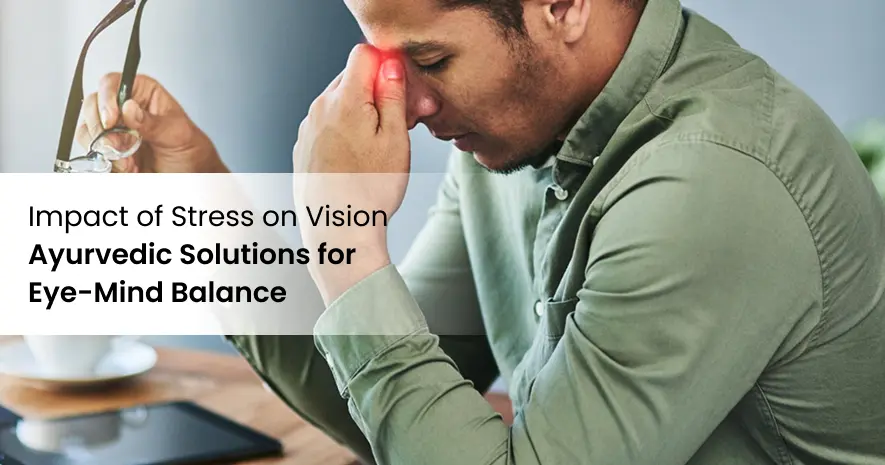
Stress is a common part of modern life, affecting both our mind and body in many ways. One area often overlooked is how stress can impact our vision. Chronic stress doesn’t just cause headaches or fatigue; it can also strain the eyes, blur vision, and even contribute to more serious eye conditions over time. Understanding the connection between stress and eye health is crucial for maintaining clear sight and overall well-being.
Key mechanism involved in stress and eye health
• Stress triggers the release of hormones like cortisol and adrenaline
• Which disrupt normal eye function by altering blood flow, intraocular pressure, and tear production.
Common Symptoms:
• Eye strain
• Blurred vision
• Light sensitivity
• Dry eyes
Over time unmanaged stress heightens risks for serious issues like diabetic retinopathy or age-related macular degeneration.
Ayurvedic view of stress
Ayurveda views stress, as a disruption of doshic balance—Vata, Pitta, and Kapha leading to Ojas kshaya (depletion of vitality and immunity), which heightens disease susceptibility.
• Vata imbalance manifests as anxiety and restlessness;
• Pitta as irritability and inflammation;
• Kapha as lethargy and withdrawal
All are influenced by ahara(diet), viharas( lifestyle), and manasika gunas like rajas (activity) and tamas (inertia).
Ayurveda attributes stress-related eye issues to doshic imbalances, primarily Vata aggravation causing dryness, twitching, and blurred vision, while Pitta excess leads to redness, burning, and inflammation. Stress depletes Ojas (vital essence), disrupts Prana Vata (nerve energy governing eyes), and accumulates Ama (toxins) in ocular tissues, mimicking modern symptoms like digital eye strain or computer vision syndrome.
Ayurvedic Solutions for Eye-Mind Balance

• Yoga: Yoga is identified as a promising methodology to reduce the progression of vision loss. Specific eye yoga exercises have been used in clinical settings alongside other therapies to successfully improve vision.
• Pranayama (Deep Breathing): Slow, deep breathing exercises are recommended to counteract tension.
• Meditation and Mindfulness: Meditation is noted to influence molecular processes, including gene repair and neuroendocrine health
• Natural herbs-herbs such as Ashwagandha, brahmi, triphala can reduce stress on optic nerves, balance the imbalanced doshas and easy eye strains from screen.
• Therapeutic practices:-
Netra Tarpana uses medicated ghee to nourish eyes, relieve dryness, and improve circulation, ideal for stress-induced fatigue.
Trataka (candle gazing) strengthens focus, clears mental fog, and prevents refractive errors.
Shirodhara and palming relax eye muscles
Pranayama balances Prana Vata for mind-eye synergy
• Lifestyle Integration:-
Dinacharya with warm oils for Abhyanga
blinking exercises to counter digital strain.
Yoga like Shavasana
Sreedhareeyam specializes in therapies like Shirodhara, where medicated oil is poured over the forehead to calm the nervous system and alleviate stress-linked headaches, and Netra Tarpana, which uses medicated ghee to nourish the optic nerve and soothe the Pitta imbalance often caused by intense mental strain. Additionally, their proprietary formulations, such as Sunetra eye drops, are specifically designed to clear ocular channels and protect against the dryness and irritation caused by high-pressure digital environments. By combining systemic detoxification through Panchakarma with targeted ocular treatments, Sreedhareeyam provides a holistic framework to reverse the depletion of Ojas and restore visual clarity.

October 16, 2026

October 09, 2026

September 24, 2026

September 19, 2026

September 18, 2026
September 03, 2026
We use cookies that are necessary for the smooth operation of the website, to improve our website and to display advertising relevant to you on social media platforms and partner websites. By clicking "Accept all", you agree to the use of cookies for convenience features and statistics and tracking. You can change these settings again at any time. If you do not agree, we will limit ourselves to technically necessary cookies. For more information, please see our privacy policy .