
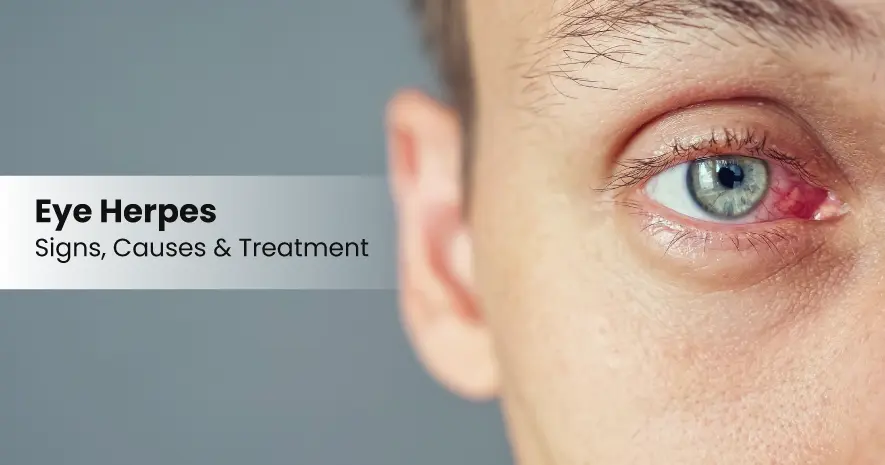
Eye herpes, medically known as Herpes Simplex Keratitis (HSK), is the most common viral infection affecting the eye. While approximately 60% of the world's population carries the Herpes Simplex Virus (HSV), fortunately, only about 1% of those individuals develop eye disease. Despite this, HSK is a significant concern, estimated to be the leading cause of corneal blindness in developed countries. Annually, it is responsible for 40,000 cases of severe unilateral visual impairment or blindness worldwide. Understanding its signs and causes is crucial for early detection and effective management.
Causes
Eye herpes is primarily caused by the Herpes Simplex Virus (HSV), a neurotrophic, double-stranded DNA virus. There are two main types:
- HSV-Type 1 (HSV-1): This is the most common cause of ocular HSV infections, accounting for about 95% of cases. It typically infects mucous membranes above the waist, including the mouth, nose, and eyes.
- HSV-Type 2 (HSV-2): While chiefly responsible for genital herpes, HSV-2 can also cause keratitis, particularly in neonates who may be infected through the birth canal.
The virus spreads through direct contact with an individual shedding the virus, commonly via the ocular mucosa. It can also spread neurally from other body sites. After the initial infection, HSV establishes lifelong latency in the trigeminal ganglion and possibly the cornea, meaning the virus lies dormant within the nerve cells. The dormant virus can reactivate, leading to recurrent eye disease. Several factors are known to trigger this reactivation:
- Stress: Psychological stress has been associated with recurrence in genital herpes, though direct evidence in eye herpes patients is still being investigated
- Environmental Factors: Sunburn, hypo- or hyperthermia, and even greater exposure to higher levels of UV light can induce reactivation
- Hormonal Changes: Menstruation and changes in sex hormones have been identified as triggers in animal models, though human evidence is lacking
- Trauma/Surgery: Trauma to the body, particularly the trigeminal ganglion area, can cause reactivation. Ophthalmic surgeries like routine cataract surgery and penetrating keratoplasty (PK) are also associated with recurrence.
- Compromised Immunity: Individuals with weakened immune systems, such as those with HIV, are at a higher risk of HSK.
- Contact Lens Wear: A small study suggested that contact lens wearers with HSK might be more prone to recurrence.
Signs and Symptoms of Eye Herpes
The symptoms of HSK typically include redness, discharge, watery eyes, irritation, itching, pain, photophobia, and blurred vision. Most symptoms begin to recede after the first two weeks of infection. While 12% of ocular HSV-1 cases can be bilateral, symptoms are usually unilateral.
Treatment according to Ayurveda
Based on Ayurvedic principles, eye herpes, particularly Herpes Zoster Ophthalmicus (HZO), can be correlated with a condition known as Pittaja abhishyanda, a type of conjunctivitis characterized by symptoms like burning sensation, redness, and swelling around the eyes. Ayurvedic treatment focuses on balancing the affected Doshas, primarily Pitta and Rakta (blood), leading to inflammation and blister formation.
Core Principles and Approaches
- Stopping Disease Progression
- Symptom-Specific Management
- Holistic Healing: Beyond physical remedies, practices like Pranayama and meditation are incorporated to improve circulation and reduce stress
Specific Ayurvedic Therapies and Medications
1. External/Topical Therapies
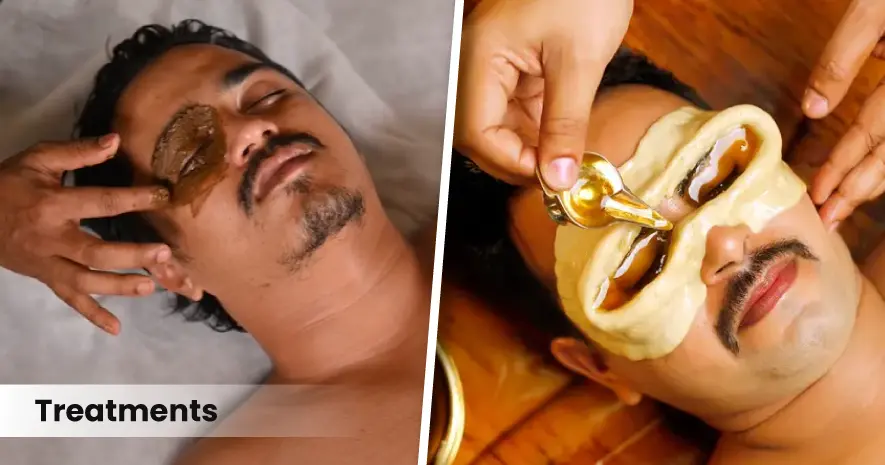
- Seka (Continuous Pouring): This involves continuously pouring a medicated decoction over the affected eye, with ingredients like Amrutha (Tinospora cordifolia), Yashtimadhu (Glycyrrhiza glabra), Chandana (Santalum album), Amalaki (Emblica officinalis), Nimba patra (Azadirachta indica), and Jati pushpa (Jasminum grandiflorum)
- Bidalaka (Local Eye Application): This therapy involves applying a medicinal paste over the closed eyelids, excluding the eyelashes with ingredients like Triphala churna, Yastimadhu churna, Saindava lavana (rock salt), and Nimba patra kalka
- Shatadhouta Ghrita (Medicated Ghee): This is an externally applied medicated ghee.
2. Internal Medications
- Oral medications are used to address systemic imbalances and symptoms:
- Sanshamani Vati: Prescribed for alleviating burning and alleviating pain
- Guduchyadi Kwath: Also administered for burning and alleviating pain
- Chandraprabha Vati: Known for its anti-inflammatory action
- Triphala Guggulu: Acts as a Vat-Kapha shamak (alleviating Vata and Kapha) and Shothaghana (anti-inflammatory)
- Dashmoola Kwath: Also serves as a Vat-Kapha shamak and Shothaghana (anti-inflammatory)
- Jatyadi Ghrita: Used for its Ropan (healing/epithelialization) properties.
- Chandanasava: Helps in reducing burning sensation in the eyes and improving sleep and appetite

October 16, 2026
October 09, 2026
September 24, 2026

September 19, 2026

September 18, 2026

September 03, 2026
We use cookies that are necessary for the smooth operation of the website, to improve our website and to display advertising relevant to you on social media platforms and partner websites. By clicking "Accept all", you agree to the use of cookies for convenience features and statistics and tracking. You can change these settings again at any time. If you do not agree, we will limit ourselves to technically necessary cookies. For more information, please see our privacy policy .