
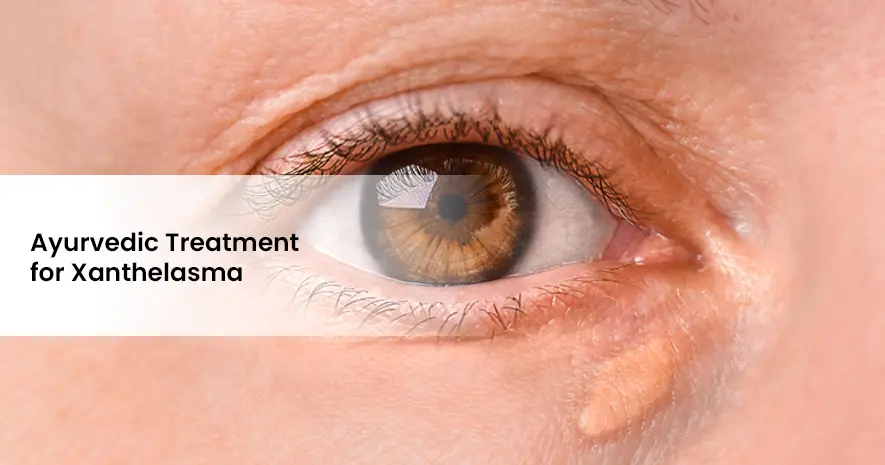
Xanthelasma (Xanthelasma palpebrarum) is a condition characterized by the development of soft, semisolid, yellow papules or plaques containing cholesterol. These deposits are typically found on the inner aspect of the eyes, most commonly along the corners of the upper and lower eyelids.
Causes or Systemic Implications
Xanthelasma palpebrarum has been linked to various medical conditions, such as
- Hyperlipidaemia
- Diabetes
- Thyroid dysfunction
While benign and generally asymptomatic, it is a significant cosmetic concern and often serves as a cutaneous marker for underlying systemic metabolic disorders.
Ayurvedic correlation of Xanthelasma
In Ayurveda, Xanthelasma is viewed as a localized manifestation of a systemic metabolic disorder, primarily categorized under "Medo-dhatu vikara" (disorder of fat tissue) involving the vitiation of Kapha dosha and Meda (fat)
The condition is often correlated with "Bisa Vartma" (due to the porous, stalk-like appearance of the eyelids in advanced stages) or "Medoja Granthi" (fatty nodular growth)
Sreedhareeyam focuses on correcting the underlying lipid metabolism to prevent recurrence.
- Panchakarma (Systemic Detoxification)
- Shamana Chikitsa (Internal Medications)

Panchakarma:
To prevent the formation of new plaques, deep systemic cleansing is often required to correct dyslipidaemia, for which
- Virechana (Therapeutic Purgation): This is the gold standard for Pitta-dominant metabolic disorders. It clears toxins from the liver and has been shown to reduce serum triglycerides and cholesterol significantly.
- Vasti (Enema): Medicated enemas using ingredients like Triphala and honey are used to "scrape" accumulated fat from the body and be superior for reducing LDL cholesterol.
Internal Medications:
Considering the involvement of Medho roga internal medications chosen will have lekhana, deepana, and kapha medhohara properties.
External applications:
Tropical applications externally for significant cosmetic concerns may help to dissolve the deposits or reduce their visibility, though these require caution near the eyes.
Before any local intervention and self-treatment, a mandatory Lipid Profile blood test is required to address the primary cause. Management should be performed under professional supervision to ensure the eyelid margin and lacrimal apparatus are protected.
Faq(Frequently Asked Question)
1. What are the symptoms of Xanthelasma?
Xanthelasma is asymptomatic. It is usually an aesthetic concern or a cosmetic issue found on or around the inner corners of eyelids. It usually starts as a soft bump that eventually grows into flat plaques. It is frequently seen symmetrically on both sides of the eyelids.
2. Is a lipid profile test necessary before treating Xanthelasma?
A lipid profile test is generally recommended before treating xanthelasma. This test measures the levels of different types of lipid in your blood, including total cholesterol, LDL cholesterol, HDL cholesterol, and triglycerides. These measurements can help identify if there is any underlying lipid disorder that might be contributing to the xanthelasma.
Even though the xanthelasma is harmless, it has a high recurrence rate. So, identifying and addressing any underlying high lipid levels is important because dyslipidemia can be a risk factor for cardiovascular diseases, such as heart disease and stroke, and reduce the recurrence of xanthelasma. Therefore, while treating xanthelasma, understanding and managing any associated lipid imbalances is a key part of an overall health assessment.
3. Can diabetes lead to Xanthelasma formation?
Diabetes can be a contributing factor to the formation of xanthelasma. People with diabetes, especially type 2 diabetes, often experience changes in their lipid metabolism. These lipid abnormalities are common underlying causes for the development of xanthelasma. Effective management of diabetes and associated dyslipidemia can help reduce the risk of further health complications, including cardiovascular disease, and may also reduce the recurrence of xanthelasma.
4. Is Xanthelasma a painful condition?
Xanthelasma is not a painful condition. It is a benign and painless skin condition. Its presence is often an indicator of an underlying lipid disorder, such as high cholesterol.

October 16, 2026

October 09, 2026
September 24, 2026

September 19, 2026

September 18, 2026

September 03, 2026
We use cookies that are necessary for the smooth operation of the website, to improve our website and to display advertising relevant to you on social media platforms and partner websites. By clicking "Accept all", you agree to the use of cookies for convenience features and statistics and tracking. You can change these settings again at any time. If you do not agree, we will limit ourselves to technically necessary cookies. For more information, please see our privacy policy .