
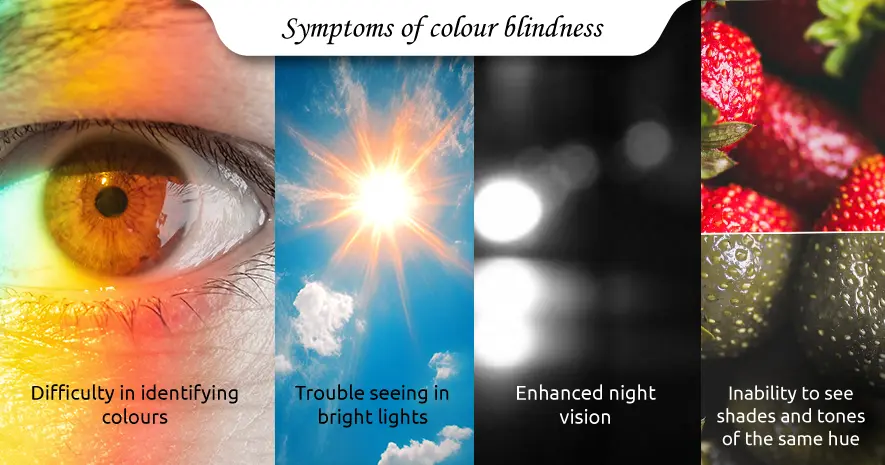
Color vision deficiency, commonly referred to as color blindness, is a condition that affects an individual's ability to perceive colors accurately. In a world where colors play a significant role in our daily lives, from identifying traffic signals to appreciating art, understanding color blindness becomes crucial. This article delves into the Ayurvedic perspective on color blindness, exploring its causes, management, and the role of traditional Indian medicine in addressing this condition.
Understanding Color Blindness:
Color blindness is a genetic condition that affects the perception of colors due to defects in the cone cells of the retina, which are responsible for color vision. These cone cells contain photo-pigments that are sensitive to different wavelengths of light, enabling us to perceive various colors. There are different types of color blindness, including red-green color blindness (the most common type), blue-yellow color blindness, and complete color blindness (achromatopsia).
The prevalence of color blindness varies among different populations, with a higher incidence in males compared to females. According to the National Eye Institute, approximately 1 in 12 men and 1 in 200 women are affected by some form of color vision deficiency. While color blindness may not directly impact overall vision, it can significantly affect an individual's quality of life, especially in professions that require accurate color discrimination, such as graphic design, aviation, and certain medical fields.
Pathophysiology of Color Blindness:
The pathophysiology of color blindness involves genetic mutations that affect the functionality of the cone cells in the retina. These mutations can lead to the production of abnormal or deficient photo-pigments, resulting in impaired color vision. Genetics plays a crucial role in the development of color blindness, as the condition is often inherited in an X-linked recessive pattern.
Recent research has shed light on the specific genetic variants and mutations responsible for different types of color blindness, contributing to a better understanding of the disease process. For instance, mutations in the OPN1LW and OPN1MW genes, which encode the red and green opsin proteins respectively, are responsible for red-green color blindness.
Ayurvedic Perspective on Color Blindness:
In Ayurveda, the ancient Indian system of medicine, color blindness is considered a manifestation of imbalances in the doshas, particularly vata and pitta. Doshas are the three fundamental principles that govern the physiological processes in the body, and their balance is essential for maintaining overall health.
Vata dosha governs the functioning of the sensory organs, including the eyes, while pitta dosha is responsible for vision and color perception. According to Ayurvedic texts, various etiological factors contribute to color blindness, such as genetic predisposition, improper diet, and lifestyle habits that disturb the doshas.
Ayurvedic Management of Color Blindness:
Ayurveda emphasizes a holistic approach to managing color blindness, focusing on restoring balance among the doshas and promoting overall eye health. This approach involves dietary modifications, lifestyle changes, and the use of specific Ayurvedic therapies and medications.
Dietary Modifications:
Ayurveda recommends incorporating specific herbs, spices, and foods that are beneficial for the eyes into one's diet. For instance, consuming foods rich in antioxidants, such as amla (Indian gooseberry), turmeric, and green leafy vegetables, can help protect the eyes from oxidative stress and support overall eye health.
Lifestyle Modifications:
Adopting a balanced lifestyle is crucial in Ayurvedic management. This includes practicing stress-reducing techniques like yoga and meditation, ensuring adequate sleep, and engaging in moderate physical activity. Additionally, minimizing exposure to environmental factors that can adversely affect eye health, such as pollution and excessive screen time, is recommended.
Ayurvedic Therapies and Medications:
Ayurveda offers various therapies and medications specifically formulated to improve vision and color perception
Conclusion:
Color blindness is a complex condition that requires a comprehensive understanding of its pathophysiology and management approaches. Ayurveda offers a unique perspective on color blindness, focusing on restoring balance among the doshas and promoting overall eye health through dietary and lifestyle modifications, as well as specific Ayurvedic therapies and medications. While Ayurveda may not provide a complete cure for color blindness, it can potentially alleviate symptoms and improve quality of life for individuals affected by this condition.

October 16, 2026

October 09, 2026

September 24, 2026

September 19, 2026

September 18, 2026

September 03, 2026
We use cookies that are necessary for the smooth operation of the website, to improve our website and to display advertising relevant to you on social media platforms and partner websites. By clicking "Accept all", you agree to the use of cookies for convenience features and statistics and tracking. You can change these settings again at any time. If you do not agree, we will limit ourselves to technically necessary cookies. For more information, please see our privacy policy .