
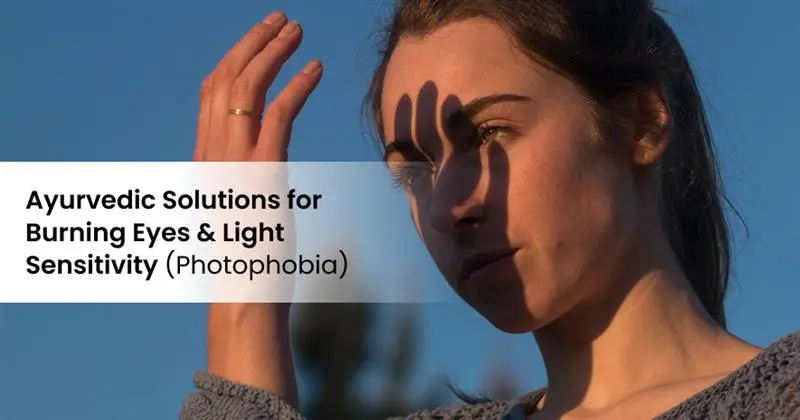
In the contemporary digital age, many of us spend extensive hours staring at screens, leading to fatigue, soreness, and strain on our eyes. When eyes feel chronically irritated, characterized by burning sensations (Daha) and heightened sensitivity to light (Photophobia), Ayurveda offers comprehensive, natural treatments rooted in balancing the body's internal energies.
Understanding the Ayurvedic Root Cause
Ayurveda, the ancient Indian medical system focused on holistic health, views the eyes as the seat of Alochaka Pitta, a subtype of Pitta Dosha that governs vision and light perception. Pitta Dosha is associated with the fire element and governs heat and metabolism.
When Pitta becomes aggravated, its inherent sharp (Tikshna) and hot (Ushna) qualities manifest locally, leading directly to inflammation and ocular hyperthermia (burning sensations)
● Burning and Redness: Excess Pitta often causes inflammation, redness, or burning sensations in the eyes.
● Photophobia: Severe light sensitivity and burning eyes often align with a high-intensity inflammatory state where there is vitiation of both Pitta Dosha and the Rakta Dhatu. Photophobia specifically suggests neurological hypersensitivity resulting from the combination of sharp Pitta heat and unstable Vata Dosha affecting the nervous system. The core therapeutic principle for managing these acute symptoms is Sheeta Chikitsa (cooling therapy)
Netra Kriyakalpa
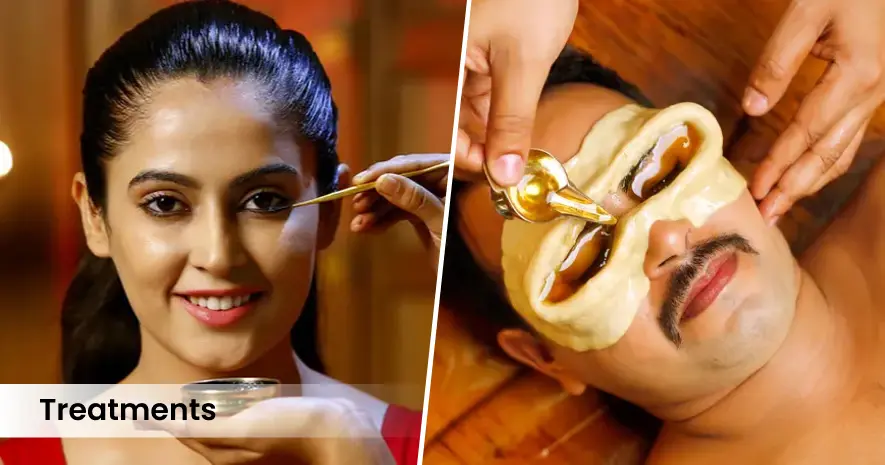
For immediate and deep relief from acute burning and light sensitivity, specialized ocular procedures called Kriyakalpa are employed.
1. Netra Tarpana (Eye Nourishment): This therapy involves creating a dam of black gram paste around the eyes and bathing them in lukewarm medicated ghee (Ghrita). As the Ghrita neutralizes heat, lubricates, and penetrates the subtle channels, this is beneficial for Vata and Pitta disorders, alleviating severe pain, burning, and dryness. Netra Tarpana specifically helps balance aggravated Pitta Dosha, which governs light sensitivity.
2. Netra Kshalana (Ocular Irrigation): Regular rinsing helps soothe irritation, cleanse the ocular surface, and provide immediate anti-inflammatory action. Cooling eye washes like herbal decoction are designed to cleanse the eyes and reduce inflammation. One of the commonly used decoctions is boiled and cooled Triphala herbal decoction , which soothes acute redness and soreness. It is important that the decoction is strained through a fine medium to remove all particulate matter, which could otherwise irritate already hypersensitive eyes.
3. Bidalaka (Medicated Eyelid Paste): This involves applying a thick medicated paste directly to the outer surface of the closed eyelids (excluding the lashes). Bidalaka is indicated in acute stages of eye diseases because it rapidly draws out localized inflammation, relieving acute symptoms like burning sensation, swelling, redness, and pain.
4. Anjana (Collyrium): This practice involves applying medicated collyrium to the inner margin of the eyelids to stimulate secretions and reduce inflammation, and for Pitta-related issues, it is usually administered at night.
Herbal Remedies for Pitta Pacification
Internal and external use of specific herbs helps correct the systemic imbalance contributing to ocular inflammation
● Triphala: Triphala is the combination of three drugs (Amlaki, Bibhitaki, Haritaki) that collectively balance all three doshas. Triphala acts as an anti-inflammatory and potent antioxidant, mitigating oxidative stress—a major concern of chronic inflammation. It can be consumed internally or can be used as an eyewash
● Medicated Ghrita (Ghee): Gheer is esteemed for its ability to neutralize heat, lubricate, and penetrate deeply, making it ideal for treating Pitta Vikara. Mahatriphala Ghrita (MTHG), a classical medicated ghee, is used to treat eye disorders, dry eyes, and computer vision syndrome.
● Amlaki (Indian Gooseberry): Rich in Vitamin C and antioxidants, Amlaki strengthens eye muscles and rejuvenates the eyes.
● Shatavari: Known for its cooling, moistening, and adaptogenic properties, Shatavari pacifies both Vata and Pitta Doshas. It is highly effective for soothing dry and inflamed mucous membranes, including the eyes
● Liquorice/Yashtimadhu: Due to its anti-inflammatory and cooling properties, Liquorice is commonly combined with ghee to treat inflammation and dry eye conditions.
Diet and Lifestyle
Sustained management of burning eyes and photophobia requires a proper lifestyle (Dinacharya) and diet (Aahara) that consistently pacify Pitta.
Since consuming foods that increase internal heat is a primary reason for Pitta aggravation, dietary regulation is essential.
★ Foods to Include (Cooling and Chakshushya): Favor cooling, antioxidant-rich foods. Include leafy greens (like spinach and kale) rich in lutein and zeaxanthin, carrots (for Vitamin A/beta-carotene), berries, and cucumbers. Ghee is also recommended for nourishing eye muscles and improving lubrication.
★ Foods to Avoid: Strictly avoid excessively spicy, salty, acidic, and oily/fried meals, as these foods significantly increase Pitta and exacerbate burning sensations and irritation.
★ Hydration: Maintain adequate hydration by consuming ample amounts of warm water and herbal infusions to support natural detoxification and ocular moisture balance.
Daily Routine (Dinacharya) Practices
➢ Palming: This practice involves gently placing warmed palms over closed eyes to relax the eye muscles. Palming provides immediate relief from strain and sensory heat.
➢ Trataka (Gazing Therapy): Focusing the gaze intently on an object, such as a candle flame, helps stabilize nervous energy and strengthen the eyes, which can reduce the nervous hypersensitivity associated with photophobia.
➢ Conscious Rest: Minimize prolonged exposure to digital screens and harsh light. Practice the 20-20-20 rule (looking away at an object 20 feet away for 20 seconds every 20 minutes) to reduce digital eye strain.
➢ Sleep Hygiene: Ensure 7 to 8 hours of quality night sleep, as insufficient rest impairs eye rejuvenation and nourishment and can worsen visual stress.
➢ Eye Cleansing: Regularly rinse eyes with cool, clean water or herbal eyewashes upon waking to soothe inflammation.
For complex and chronic ocular complaints like burning and photophobia, which are often systemic imbalances, seeking personalized treatments from an Ayurvedic practitioner is highly recommended. Consistent adherence to these individualized protocols ensures long-term vision improvement and holistic eye health.

October 16, 2026

October 09, 2026

September 24, 2026

September 19, 2026

September 18, 2026

September 03, 2026
We use cookies that are necessary for the smooth operation of the website, to improve our website and to display advertising relevant to you on social media platforms and partner websites. By clicking "Accept all", you agree to the use of cookies for convenience features and statistics and tracking. You can change these settings again at any time. If you do not agree, we will limit ourselves to technically necessary cookies. For more information, please see our privacy policy .