
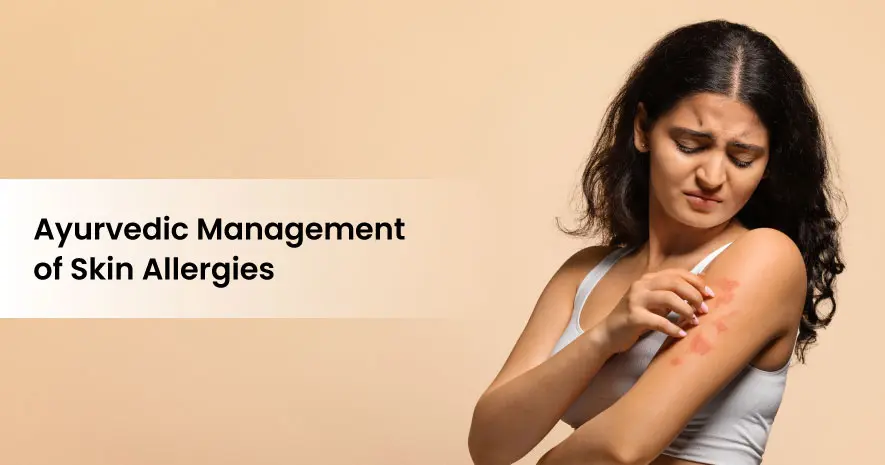
Skin allergies, often manifesting as persistent itching, redness, rashes, swelling, and dryness, affect millions globally. While conventional treatments frequently rely on symptomatic relief through antihistamines and steroids, Ayurveda offers a holistic, root-cause approach that focuses on internal detoxification, balancing vital energies (Doshas), and strengthening natural immunity. In Ayurveda, skin allergies are generally classified under the broad term Kushta Roga or Tvak Vikara (skin disorders).
Ayurveda views skin diseases as indicators of deeper imbalances in digestion, immunity, and blood quality. Skin allergies typically arise from the vitiation of the three Doshas (Vata, Pitta, and Kapha), often involving all three, but with a predominance of one or two. Vitiation of the blood (Rakta) associated with aggravated Pitta dosha is often dominant in skin allergies, leading to inflammation, redness, and burning. Due to Vata aggravation, it causes characteristic dryness, scaling, and intense itching (Kandu). Kapha aggravation leads to oozing, swelling, profuse discharge (Bahusrava), and thickened skin.
The primary causative factor for disease is Agnimandhya (weak digestive fire). Weak digestion leads to incomplete digestion and fermentation, producing undigested residues called Ama (toxins). This Ama circulates and lodges in the affected body tissues, which include the skin (Twak), blood (Rakta), muscle tissue (Mamsa), and lymph (Lasika). This process triggers hypersensitivity and results in the manifestation of skin disorders like Eczema (Vicharchika) or Urticaria (Sheetapitta)
Management
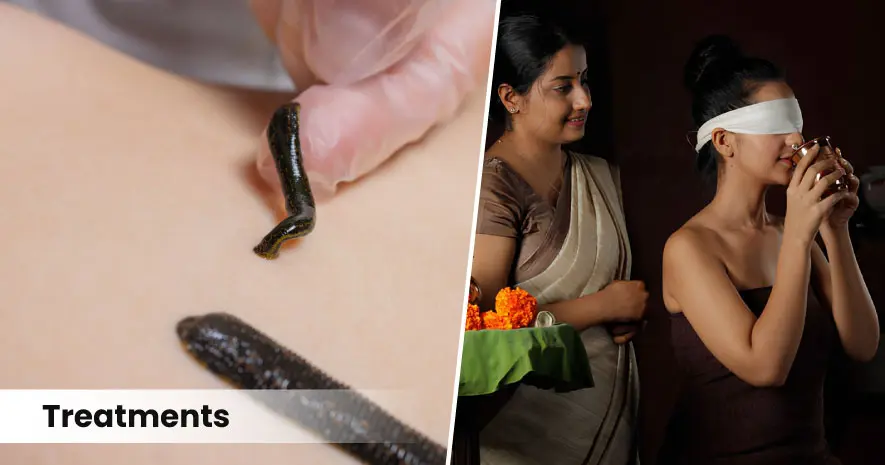
For chronic, non-responsive conditions, the primary focus in Ayurvedic management is detoxification and rejuvenation through Panchakarma. Panchakarma cleanses toxins (Ama) from the body, purifies the blood (Rakta shodhana), and is essential for achieving disease cure and preventing recurrence in chronic skin diseases.
Before panchakarma procedures like Vamana or Virechana, preparatory steps (Purva Karma) are performed like Deepana-Pachana which helps in therapeutic enhancement of digestive capacity, with formulations like Vaiswanara Choorna
Snehapana (therapeutic administration of unctuous formulations), with medicines such as Mahathikthaka Ghrtha, which is indicated in the management of skin diseases
Herbal and Topical Management (Shamana Chikitsa)
Shamana (pacification) therapies using internal medicines and external applications are also prescribed
Single Drugs
| Herb (Sanskrit Name) | Key Properties/Action | Benefits for Skin Allergies |
|---|---|---|
| Neem (Nimba) | Blood purifier, Cooling, Anti-inflammatory, Anti-bacterial | Purifies blood, reduces itching. Clinical studies show Neem leaf extract is effective for Eczema and Scabies. A paste of Neem and Turmeric cured eczema in 97% of cases within 3–15 days. |
| Turmeric (Haridra) | Anti-inflammatory, Anti-allergic, Antifungal | Boosts immunity and supports healing. It inhibits Immunoglobulin E-mediated Mast Cell activation. |
| Manjistha | Detoxifier, Astringent, Pittahara, Rakta Shodhaka (blood purifying) | Removes toxins, balances Pitta, and improves skin complexion. |
| Guduchi | Bitter, Enhances immunity | Used in the management of chronic skin disorders. |
| Amla (Indian Gooseberry) | Rich in tannins, Free radical–neutralizing properties | Reduces photo-aging and improves skin elasticity. |

October 16, 2026
October 09, 2026
September 24, 2026

September 19, 2026

September 18, 2026

September 03, 2026
We use cookies that are necessary for the smooth operation of the website, to improve our website and to display advertising relevant to you on social media platforms and partner websites. By clicking "Accept all", you agree to the use of cookies for convenience features and statistics and tracking. You can change these settings again at any time. If you do not agree, we will limit ourselves to technically necessary cookies. For more information, please see our privacy policy .