
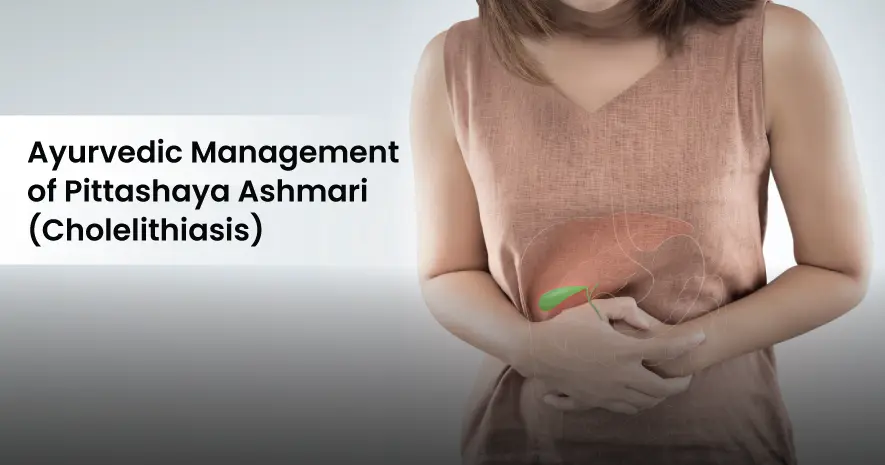
Cholelithiasis, or the formation of gallstones within the gallbladder, is a condition of increasing concern in modern clinical practice. Often asymptomatic in the early stages, it can present dramatically when stones obstruct the biliary tract, resulting in intense pain, digestive disturbances, and inflammation. In contemporary medicine, the conventional approach primarily focuses on surgical intervention—particularly cholecystectomy (gallbladder removal). However, Ayurveda proposes a more nuanced, holistic, and non-invasive framework that emphasizes root cause resolution, functional restoration, and long-term health maintenance.
Within the Ayurvedic lexicon, gallstone disease is conceptualized as Pittashaya Ashmari, a subtype of the broader pathology of Ashmari (stone formation). While Ashmari is predominantly described in the context of the urinary system, the pathophysiological principles underpinning its formation—deranged digestion, metabolic waste accumulation, doshic imbalance, and channel obstruction—offer a compelling parallel to the etiology of biliary stones. The gallbladder, known in Ayurveda as Pittashaya, is the storage site for Achha Pitta—refined bile—whose equilibrium is critical for proper digestion and metabolic regulation.
The development of gallstones, in both traditional and biomedical understanding, is multifactorial. In the Ayurvedic view, gallstone formation is principally driven by vitiation of Pitta and Kapha doshas, coupled with impairment of the Agni (digestive fire). The bile, which under normal circumstances maintains fluidity due to its inherent unctuous (snigdha) and hot (ushna) qualities, becomes thickened when Pitta becomes excessively sharp (tikshna) and Kapha accumulates, inducing stasis. The resulting imbalance encourages the precipitation of solids—much like cholesterol or bilirubin crystals seen in allopathic pathology. This process also reflects the role of Ama, the undigested, toxic by-product of impaired metabolism, which further contributes to obstruction and sedimentation within the bile ducts.
Clinically, Pittashaya Ashmari may manifest through a constellation of symptoms that resemble those of biliary colic. There may be intermittent or sharp pain in the upper right quadrant of the abdomen, often radiating to the scapular region. Associated complaints include nausea, vomiting, bloating, heaviness after meals, poor appetite, and a sensation of fullness. In more advanced stages or with complications like cholecystitis, fever and systemic signs may also appear. Ayurveda attributes such presentations to the accumulation and blockage of doshas, primarily Pitta and Kapha, and disturbances in the Rasa and Rakta dhatus, which are critical for circulatory and metabolic functions.
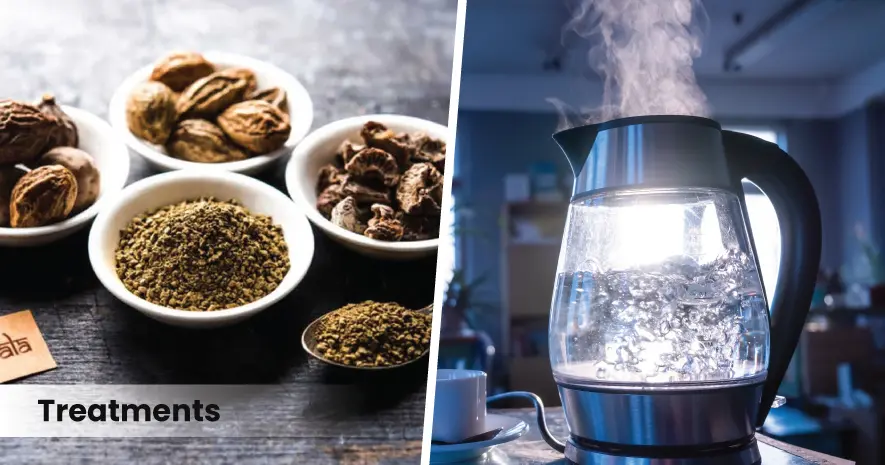
Management in Ayurveda follows a tiered, individualized approach. The primary therapeutic objectives include dissolution or fragmentation of the stone (Ashmari Bhedana), stimulation of bile secretion (Pittavirechana), restoration of digestive strength (Deepana-Pachana), and rejuvenation of hepatobiliary function (Yakrit Prasadana). These goals are achieved through a combination of internal medicines, external therapies, dietary interventions, and lifestyle correction.
Among the cornerstone formulations in Ayurvedic management of gallstones is Arogyavardhini Vati. This classical preparation integrates hepatoprotective, lipid-lowering, and anti-inflammatory herbs and minerals. Katuki (Picrorhiza kurroa) stimulates bile flow and detoxifies the liver, Guggulu (Commiphora mukul) mobilizes cholesterol and enhances metabolism, Chitraka (Plumbago zeylanica) ignites digestion, and Shuddha Shilajatu fortifies tissues while eliminating toxins. Together, these ingredients work synergistically to normalize bile consistency, dislodge stones, and support bile drainage.
Another frequently employed decoction is Patolakaturohinyadi Kashaya, containing Patola, Katuki, and Guduchi, which pacify Pitta and purify the liver and blood. Varunadi Kashaya, with its primary ingredient Varuna (Crataeva nurvala), is renowned for its lithotriptic action—traditionally used for both renal and biliary calculi. Yavakshara, an alkaline ash derived from barley, offers additional support by modifying the bile’s physicochemical properties and reducing mucosal inflammation, thus preventing new stone formation.
In certain cases, especially where there is mild discomfort or early-stage cholelithiasis, Katuki powder may be administered directly or applied externally as a fomentation over the gallbladder region. This dual method stimulates bile secretion, reduces inflammation, and eases discomfort. The use of Triphala, a blend of Amalaki, Bibhitaki, and Haritaki, is often integrated to ensure gentle detoxification and regulate bowel movements, as constipation may exacerbate biliary stasis.
The scientific exploration of these herbs corroborates their traditional uses. Picroside compounds in Katuki exhibit choleretic and hepatoprotective properties. Guggulsterones from Guggulu lower serum triglycerides and cholesterol, facilitating biliary cholesterol homeostasis. Guduchi, rich in diterpenoid lactones and alkaloids, offers immunomodulatory and anti-inflammatory effects, while Varuna has shown potential in breaking down biliary sludge through its astringent and mucolytic properties.
Prevention, as emphasized in Ayurveda, plays an equally vital role in long-term management. A Pitta-pacifying diet, emphasizing bitter and astringent tastes, freshly cooked light meals, and hydration with warm water or digestive infusions, is advised. Foods rich in saturated fats, fried preparations, sour or fermented items, and erratic eating habits are to be avoided. Physical activity should be consistent but not excessive, and daily routines must align with Dinacharya and Ritucharya principles to avoid seasonal doshic aggravation.
Furthermore, stress management and adequate sleep are imperative, as psycho-emotional factors can influence digestion and hepatic function. Periodic detoxification (Shodhana) under professional guidance helps clear subtle imbalances and restore metabolic clarity.
In conclusion, Ayurveda offers a comprehensive and intelligent blueprint for managing gallstone disease, rooted in systemic balance and digestive integrity. The condition of Pittashaya Ashmari, while complex, need not always be approached with surgical inevitability. Through individualized therapies, potent herbal combinations, and disciplined lifestyle adjustments, Ayurveda fosters both resolution and resilience—providing an alternative paradigm that honors the body’s innate capacity for healing and harmony.
March 30, 2026

March 25, 2026

March 20, 2026
March 17, 2026

March 09, 2026

March 05, 2026

February 11, 2026

February 11, 2026

January 29, 2026

January 23, 2026
January 12, 2026

January 09, 2026
We use cookies that are necessary for the smooth operation of the website, to improve our website and to display advertising relevant to you on social media platforms and partner websites. By clicking "Accept all", you agree to the use of cookies for convenience features and statistics and tracking. You can change these settings again at any time. If you do not agree, we will limit ourselves to technically necessary cookies. For more information, please see our privacy policy .