
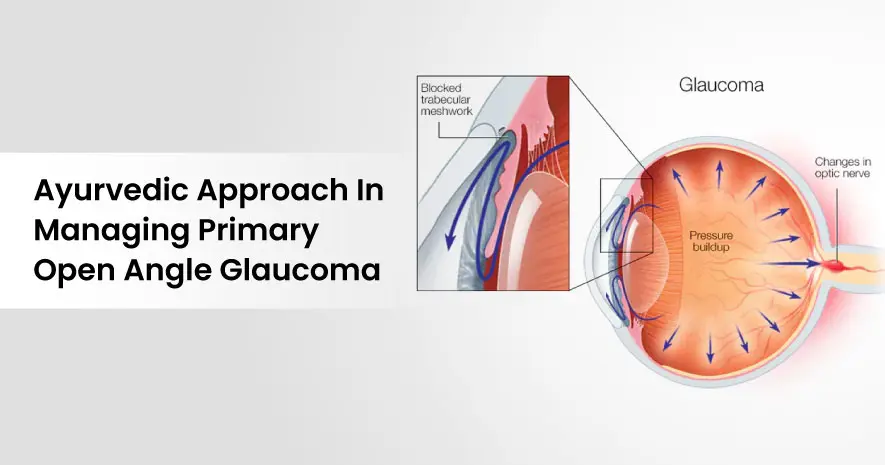
Glaucoma is often called the "silent thief of sight" because it can steal vision without early warning signs or pain. Primary Open-Angle Glaucoma (POAG) is the most common form, where the drainage angle of the eye remains open, but the drainage channels become blocked over time, leading to increased intraocular pressure (IOP). While modern medicine focuses heavily on lowering IOP using eye drops, laser, or surgery, the disease can still progress in some patients even when pressure is controlled. The condition is classically correlated with Adhimantha (specifically Kaphaja Adhimantha due to the typical absence of pain) or Timira (progressive vision loss), and is often viewed as Jara Vyadhi, a degenerative disease of aging.
What is Primary Open Angle Glaucoma (POAG)?
Primary Open-Angle Glaucoma is a chronic, progressive, and bilateral disease typically observed in adults. It is currently the second leading cause of irreversible blindness worldwide and the third leading cause in India.
It is characterized by three key features:
1. Elevated Intraocular Pressure (IOP): Pressure typically exceeding 21
2. Optic Nerve Damage: Specific damage to the optic nerve head, known as glaucomatous optic neuropathy.
3. Open Anterior Chamber Angle: The drainage angle of the eye remains open and appears normal, yet fluid drainage is impaired.
Pathophysiology: The "Causes"
While the exact cause of Primary Open-Angle Glaucoma (POAG) is often idiopathic, modern science explains its mechanism through two primary theories:
• The Mechanical Theory (Pressure): This theory suggests that as we age, the eye's natural drainage system gets clogged or weak due to debris building up. This prevents fluid from leaving the eye, causing pressure to build up until it physically squashes and damages the optic nerve.
• The Vascular Theory (Blood Flow): This theory suggests that the blood vessels feeding the eye struggle to regulate themselves properly. This starves the optic nerve of the blood and oxygen it needs, causing nerve cells to die—even if the eye pressure appears normal.
Pathologically, the disease stems from Srotavarodha (obstruction of bodily channels) caused by a triad of Dosha imbalances. Aggravated Vata—specifically Prana and Vyana Vayu—triggers vascular spasms and degeneration, while Kapha and metabolic waste (Malasanchaya) clog the aqueous outflow channels and nutrient pathways (Rasavaha Srotas). This dual obstruction raises intraocular pressure and starves the optic nerve of essential nutrients, leading to tissue death and vision loss.
Signs and Symptoms
POAG is famously known as the "silent thief of sight" or "silent killer of vision" because it is insidious and asymptomatic in the early stages.
• Absence of Pain: POAG typically does not present with pain.
• Early Symptoms: Most patients have no symptoms initially. If the IOP is significantly elevated, one might experience slight discomfort, a sensation of heaviness in the eyes, or mild headaches.
• Advanced Symptoms:
o Blurred Vision: As the disease progresses, patients may notice a decline in visual acuity.
o Visual Field Loss: Characteristic defects appear in the visual field. This often begins as a loss of peripheral (side) vision and, if untreated, progresses to "tunnel vision" and eventual blindness.
o Frequent Prescription Changes: Some patients may experience frequent changes in their presbyopic glasses
Risk Factors of POAG
Primary Open-Angle Glaucoma (POAG) is a multifactorial disease driven by a combination of demographic, systemic, and ocular variables. Advanced age is a well-established major risk factor, with the disease's prevalence increasing significantly in older populations. Elevated Intraocular Pressure (IOP), particularly exceeding 21 mmHg, is the most significant modifiable risk factor, though optic nerve damage can proceed even when pressure is within normal limits. Other notable risk factors include a positive family history, myopia (near-sightedness), and systemic illnesses such as diabetes mellitus and hypertension. Additionally, early menopause has been identified as a high-risk factor, and sedentary lifestyles may contribute to higher intraocular tension compared to physically active individuals.
Ayurvedic Management of POAG
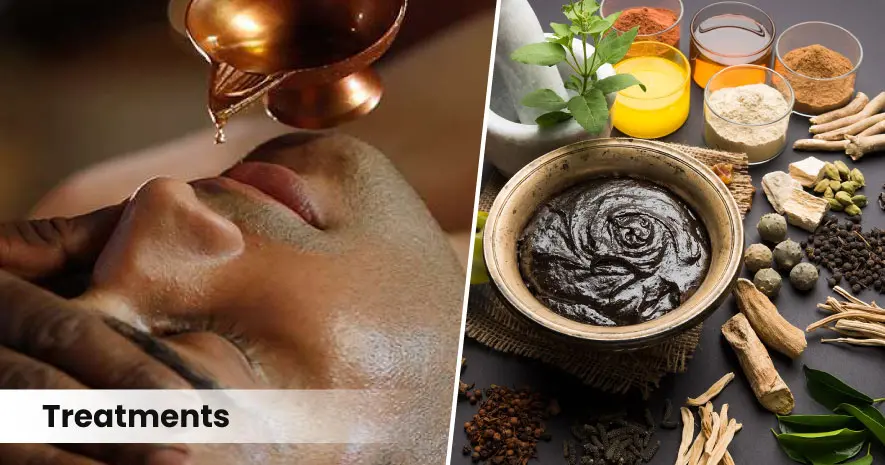
The Ayurvedic approach to Primary Open Angle Glaucoma (POAG) is holistic, focusing not only on lowering Intraocular Pressure (IOP) but also on neuroprotection (protecting the optic nerve) and neuro-regeneration. While modern medicine primarily targets the mechanics of fluid drainage, Ayurveda addresses the systemic roots of the disease—metabolism, circulation, and tissue degeneration.
Treatment Principles (Chikitsa Sutra)
The management strategy is a multi-pronged approach involving Shodhana (purification), Shamana (palliative medication), and Rasayana (rejuvenation).
- Goal: To clear obstructions, drain excess fluid (diuretic action), nourish the optic nerve, and arrest further vision loss
Shodhana (Bio-Purification Therapy)
The primary goal of purification therapy in this context is to cleanse the bodily channels to facilitate the drainage of fluid and lower intraocular pressure.
- Virechana (Therapeutic Purgation): This procedure involves the internal administration of purgative medicines to eliminate toxins and clear the channels. This cleansing of the structural and functional channels helps enable the smooth flow of aqueous humor.
- Nasya (Nasal Medication): The treatment protocol includes the administration of medication through the nasal route.
Shamana (Palliative Therapy):
Shamana therapy employs oral palliative medicines, including decoctions and capsules, to enhance digestion and correct metabolism, ensuring proper nutrient delivery to the body tissues. These formulations are specifically chosen for their ability to pacify aggravated Vata, Pitta, and Kapha doshas while providing direct ophthalmic benefits such as nourishing the eyes and improving vision. Additionally, the therapy aims to alleviate associated symptoms like headaches through tranquilizing effects, supporting the overall management of the condition.
Rasayana (Rejuvenation and Nourishing Therapy)
Rasayana therapy focuses on nourishment (Bramhana) and neuroprotection to arrest degeneration and reinvigorate ocular nerves. Internal administration of medicated ghee provides systemic strength and pacifies Vata, while specialized local procedures like retaining medicated lipids over the eyes facilitate deep penetration to the retina. These interventions are complemented by head therapies, such as pouring medicated oil over the scalp, which deliver nutrients directly to target tissues, ultimately aiming to limit neuronal damage and preserve vision
Pathya (Wholesome / Recommended)
- Dietary Recommendations:
A wholesome diet for managing Primary Open Angle Glaucoma includes grains like wheat (Godhuma) and barley (Yava), along with beneficial pulses such as green gram (Mudga). It is advised to maintain a high intake of vegetables, specifically drumstick leaves (Shigru) and other green leafy varieties, while incorporating antioxidant-rich Chakshushya (eye-beneficial) foods like Amla. Additionally, the inclusion of plain or medicated ghee is strongly recommended for its ability to nourish the tissues and pacify Vata dosha
- Lifestyle Recommendations:
Maintaining a tranquil and calm mind is considered essential for managing the condition. This mental balance should be supported by specific eye exercises to improve ocular health and regular, moderate physical activity. Exercise is particularly beneficial as it helps lower Intraocular Pressure (IOP), with physically active individuals generally demonstrating lower pressure levels compared to those leading a sedentary lifestyle.
Apathya (Unwholesome / To Be Avoided)
- Dietary Restrictions:
To manage the condition effectively, patients should avoid foods rich in sugar and restrict the excessive intake of oily foods and refined products such as Maida. Furthermore, it is crucial to avoid "heavy" foods that impair digestion (Agnimandya) or lead to the accumulation of waste (Malasanchaya), as these contribute to the blockage of bodily channels (Srotavarodha), which exacerbates the disease pathology.
- Lifestyle Restrictions:
To prevent aggravating the condition, patients are advised to minimize visual strain and strictly avoid direct exposure to environmental irritants such as harsh sunlight, dust, and smoke. Furthermore, it is crucial to avoid a sedentary lifestyle, which has been correlated with higher intraocular pressure, and to actively manage mental stress, as psychological tension can worsen the disease progression.
March 30, 2026
March 25, 2026

March 20, 2026
March 17, 2026
March 09, 2026

March 05, 2026

February 11, 2026

February 11, 2026
January 29, 2026

January 23, 2026
January 12, 2026
We use cookies that are necessary for the smooth operation of the website, to improve our website and to display advertising relevant to you on social media platforms and partner websites. By clicking "Accept all", you agree to the use of cookies for convenience features and statistics and tracking. You can change these settings again at any time. If you do not agree, we will limit ourselves to technically necessary cookies. For more information, please see our privacy policy .