
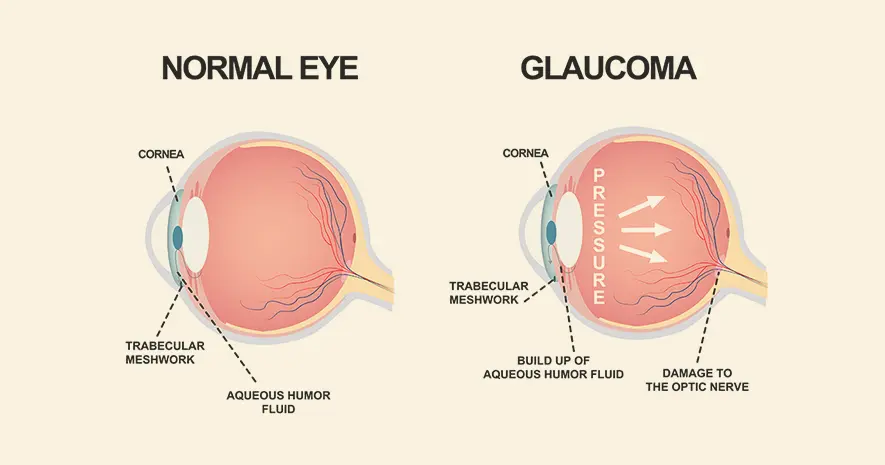
Glaucoma is a serious eye condition that can damage your optic nerve and cause vision loss or blindness. In this article, we will explain what glaucoma is, what are its types, how it affects your eyes, and how it can be treated.
What is glaucoma?
Glaucoma is a group of eye disorders that damage your optic nerve, which is the connection that connects your eye to your brain. The optic nerve is responsible for transmitting the images that you see to your brain, where they are processed and interpreted. If the optic nerve is damaged, your vision will be affected.
The most common cause of glaucoma is a buildup of pressure inside your eye, called intraocular pressure (IOP). Your eye produces a clear fluid called aqueous humor, which nourishes and cleanses your eye. This fluid normally flows out of your eye through a mesh-like channel called the drainage angle. If this channel gets blocked or the eye produces too much fluid, the fluid will accumulate and increase the pressure inside your eye. This pressure can damage the optic nerve over time and lead to vision loss.
What are the types of glaucoma?
There are several types of glaucoma, but the two main ones are open-angle glaucoma and angle-closure glaucoma.
Open-angle glaucoma
Open-angle glaucoma affects up to 90% of the population. It occurs when the drainage angle of your eye is not able to manufacture a fluid that flows through the front section of the eye, causing the eye pressure to rise gradually. The drainage angle appears to be open and normal, but the fluid does not drain properly. This type of glaucoma develops slowly and painlessly, and you may not notice any symptoms until you have significant vision loss. Hence, this type of glaucoma is known as the “silent thief of sight”. That is why it is important to have regular eye exams to detect and treat glaucoma early.
Angle-closure glaucoma
Angle-closure glaucoma is a less common but more serious type of glaucoma, which occurs when the drainage angle of your eye becomes blocked, causing a rapid increase in eye pressure. This can happen when your pupil increases in size (dilated) too quickly, such as in dim light or when taking certain medications. This blocks the drainage angle and prevents the fluid from leaving your eye. This type of glaucoma can cause symptoms such as severe eye pain, headache, nausea, blurred vision, and seeing halos around lights. It is a medical emergency that requires immediate treatment to prevent permanent vision loss.
How does glaucoma affect your eyes?
Glaucoma affects your eyes by damaging your optic nerve and reducing your field of vision. Your field of vision is the area that you can see around you without moving your eyes or head. Glaucoma usually affects your peripheral vision first, meaning that you may lose sight of the objects or people on the sides of your vision. You may not notice this at first, because your central vision, which is used for reading and recognizing faces, may still be intact. However, as the disease progresses, your central vision may also be affected, and you may eventually become blind.
Glaucoma can also affect your eyes by changing their appearance. Some people with glaucoma may develop redness, swelling, or cloudiness in their eyes. Some glaucoma medications may also cause side effects such as eye color change, darkening of eyelid skin, eyelash growth, droopy eyelids, or sunken eyes.
How can glaucoma be prevented?
Glaucoma cannot be prevented, but you can reduce your risk of developing it or slow down its progression by following these tips:
Have regular eye exams. This is the best way to detect glaucoma early, before it causes irreversible vision loss. You should have a comprehensive dilated eye exam at least once every two years, or more often if you have a higher risk of glaucoma, such as being older than 40, having a family history of glaucoma, or having diabetes.
Know your eye pressure. Your eye pressure is measured in millimeters of mercury (mmHg), and the normal range is between 10 and 21 mmHg. However, some people may have glaucoma even with normal eye pressure, and some people may not have glaucoma even with high eye pressure. Your eye doctor will determine your target eye pressure based on your eye condition and other factors. You should monitor your eye pressure regularly and follow your eye doctor’s advice to keep it within the target range.
Protect your eyes from injury. Eye injury can cause or worsen glaucoma by damaging your optic nerve or blocking your drainage angle. You should wear protective eyewear, such as goggles or sunglasses, when playing sports, working with tools, or being exposed to sunlight or dust. You should also avoid rubbing your eyes or putting pressure on your eyes, such as with tight-fitting masks or goggles.
Live a healthy lifestyle. Your overall health can affect your eye health and your risk of glaucoma. You should eat a balanced diet rich in antioxidants and omega-3 fatty acids, to nourish and protect your eyes. You should exercise regularly, but avoid activities that involve head-down positions or straining, as they may increase your eye pressure. You should also manage your blood pressure, blood sugar, and cholesterol levels, as they may affect your blood flow and oxygen supply to your eyes. You should avoid smoking, drinking alcohol, or using illegal drugs, as they may harm your eyes and your health.
What is glaucoma according to ayurveda?
Kaphaja Adhimanta
Kaphaja Adhimanta is caused by the aggravation of Kapha Dosha, which is responsible for weight and stability in the body. It is characterized by symptoms such as:
Swollen eye and excess tearing
Itching, coldness, heaviness, and sliminess of the eyes
Running nose and headache
Feeling as though the eyes are full of sand
Raktaja Adhimanta
Raktaja Adhimanta is caused by the aggravation of Rakta or blood. It is characterized by symptoms such as:
Eye looks red and delicate
Bleeding, due to which there is loss of vision
Inflamed and reddish discoloration of the eye
In addition, Adhimanta can manifest as a combination of two Doshas (Samsarga) or equally with all three Doshas (Sannipata). In these cases, specific features of the affected Doshas are seen.

September 09, 2026
September 03, 2026
August 22, 2026

August 19, 2026
August 11, 2026

August 06, 2026
We use cookies that are necessary for the smooth operation of the website, to improve our website and to display advertising relevant to you on social media platforms and partner websites. By clicking "Accept all", you agree to the use of cookies for convenience features and statistics and tracking. You can change these settings again at any time. If you do not agree, we will limit ourselves to technically necessary cookies. For more information, please see our privacy policy .