
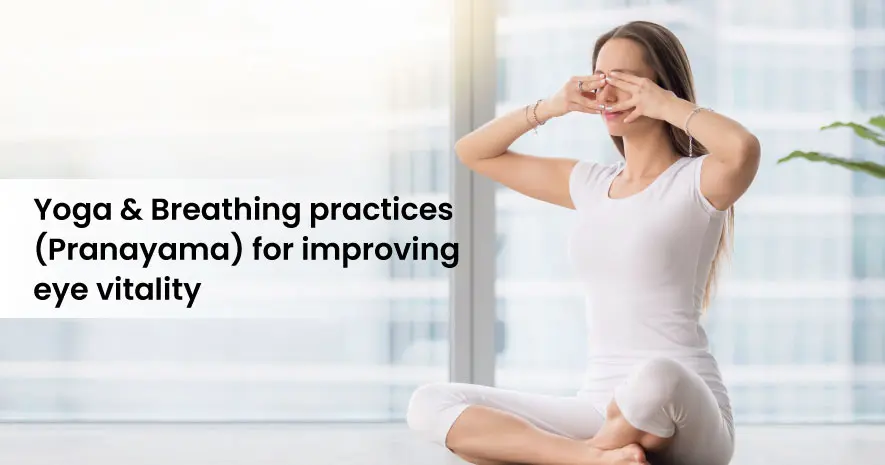
Yoga and pranayama are widely accepted non-invasive source of measures that can enhance eye vitality by regulating ocular pressure, improving circulation, reducing visual strain, improving visual acuity and enhancing the eye muscular health. While the practices of yoga and pranayama do not cure serious eye conditions, consistent yoga and pranayama can support eye comfort, reduce fatigue, and help in the management of certain symptoms related to vision problems.
Specific Eye Exercises for Eye Vitality
Palming: This classic technique involves rubbing hands to generate heat and placing them gently over closed eyes, blocking out all light. Combined with slow, deep breathing, this practice soothes tired eyes, reduces strain, and relieves fatigue from prolonged screen use or reading.
Rolling of eyes: Rolling the eyes in both clockwise and counter clockwise directions encourages muscle strength, flexibility, and increased blood flow to the eyes.
Blinking: Rhythmic blinking keeps eyes moist and refreshed, preventing dryness and irritation that often affects individuals who use devices for long periods.
Focusing on near and far objects: Alternately focus on a close object (like a thumb) and something far away. This enhances the flexibility of eye muscles and supports shifting focus with ease.
Up and down gazing: Move the gaze from looking up to down, synchronizing with the breath to stretch the vertical muscles of the eye.
Side by side gazing: Move the gaze from left to right and vice versa without turning the head, helping to enhance lateral muscle flexibility.
20/20/20 rule: Every 20 minutes, look at something 20 feet away for 20 seconds to give eyes periodic rest and relaxation.
Eye massage: Gently massage around the closed eyes in circular motions to relax eye muscles and relieve tension
Yoga beneficial for ocular vitality:
- Surya Namaskar (Sun salutation exercise)
- Sukhasana (relaxation posture)
- Halasana (Plough Pose)
- Balasana (Child Pose)
- Pada Hastasana (Hands to Feet Pose)
TRATAKA: Focusing on a single object (such as a candle flame) without blinking enhances concentration, sharpens vision, and develops ocular endurance. This practice also integrates mindfulness benefits.
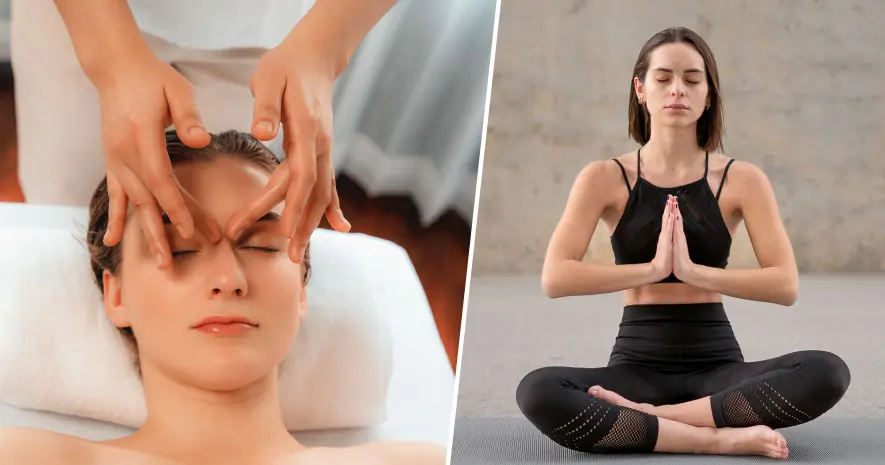
Pranayama for improving eye vitality
- Anulom Vilom(Alternate Breathing Technique)
- Kapalabhati Pranayama
- Bhramari Pranayama
- Bhastrika Pranayama
Overall Visual Function
- Improving Visual Acuity
- Stress Reduction
- Purification and Clarity
- Relaxation
- Reducing PG power.
Contraindications for Yoga Poses and pranayama
- Individuals with ocular hypertension and glaucoma
- Macular edema
- High Myopia
- Post- Ocular Surgery
- Hypertension
- Heart disease
In general, while yoga and pranayama offer benefits for ocular health, those with existing eye conditions (like glaucoma) or systemic conditions (like hypertension) must proceed with caution and consult a healthcare provider regarding practices that increase IOP or involve inversions. It is recommended that you undertake the practice of yoga and pranayama only under the guidance of a well-versed and certified instructor.
October 16, 2026

October 09, 2026

September 24, 2026

September 19, 2026

September 18, 2026
September 03, 2026
We use cookies that are necessary for the smooth operation of the website, to improve our website and to display advertising relevant to you on social media platforms and partner websites. By clicking "Accept all", you agree to the use of cookies for convenience features and statistics and tracking. You can change these settings again at any time. If you do not agree, we will limit ourselves to technically necessary cookies. For more information, please see our privacy policy .