
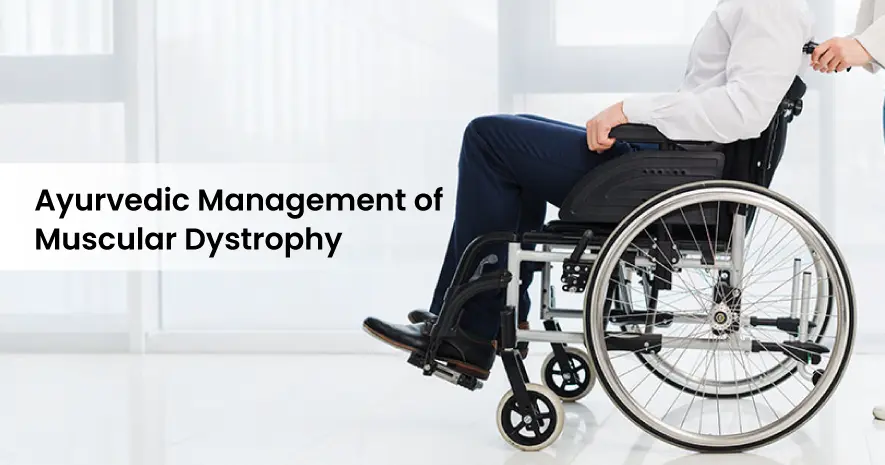
Muscular Dystrophy (MD) encompasses a group of inherited disorders characterized by progressive weakening and degeneration of skeletal muscles. These disorders are rooted in genetic mutations that impair the synthesis or structural stability of muscle proteins, ultimately resulting in the gradual loss of muscle mass and strength. Among the most commonly known forms are Duchenne Muscular Dystrophy (DMD) and Limb-Girdle Muscular Dystrophy (LGMD), both of which significantly compromise motor function and, in severe cases, can affect cardiac and respiratory systems, leading to a shortened lifespan.
From the lens of Ayurvedic medicine, muscular dystrophy is understood as Adibala Pravritta Vyadhi, a category that encompasses congenital and hereditary diseases. The etiological concept is deeply rooted in the doctrine of Beejabhaga and Beejabhagavyava Dushti, a classical explanation for disorders originating from defects in the reproductive components that form the genetic substrate of the individual. In this context, it aligns well with the modern understanding of chromosomal and gene-level mutations.
The pathogenesis of muscular dystrophy in Ayurveda primarily involves the aggravation of Vata Dosha, particularly due to Dhatukshaya, or the progressive depletion of structural tissues such as Mamsa Dhatu (muscle tissue) and Meda Dhatu (adipose tissue). These degenerative changes are often compounded by Agnimandya, or impairment in cellular metabolism at the tissue level, leading to the accumulation of Ama, the toxic byproduct of incomplete digestion and metabolism. The presence of Ama results in Srotorodha, or obstruction in the body’s channels, which impedes nutrient distribution and exacerbates tissue depletion.
The Ayurvedic treatment strategy seeks to address these pathological events at multiple levels. The primary objective is to pacify the aggravated Vata Dosha, restore tissue metabolism, remove metabolic toxins, and most importantly, nourish and regenerate the deteriorating muscular structures. This therapeutic approach is neither symptomatic nor suppressive but rather focuses on restoring the functional equilibrium of the entire body system over time.
Treatment begins with Agni Deepana and Ama Pachana, which are processes aimed at improving digestion and tissue-level metabolism. These preparatory steps help the body to assimilate nourishment more efficiently and prepare it for subsequent rejuvenation therapies. Following this, therapies like Abhyanga, the application of medicated oils with gentle massage, play a crucial role in enhancing circulation, strengthening muscles, and improving elasticity of the connective tissues. Oils such as Balashwagandhadi Taila and Mahanarayana Taila, enriched with potent Vata-pacifying herbs, are often used to replenish the depleted Mamsa Dhatu and relieve stiffness.
The application of Swedana, or fomentation therapy, especially in the form of Shashtika Shali Pinda Sweda, wherein medicated milk and red rice boluses are applied over the body, provides both nourishment and relaxation to the muscles. This therapy helps restore pliability, reduce pain, and promote circulation. Another cornerstone of treatment is Basti, the administration of medicated enemas, which is considered one of the most effective ways to manage Vata disorders. Different variants such as Brimhana Basti, Matra Basti, and Yapana Basti are utilized depending on the patient’s strength and condition. Notably, Mamsa Rasa Basti and Majja Basti, which use muscle broth or bone marrow decoctions, are specifically indicated for enhancing muscle bulk and strengthening neuromuscular connections.
Virechana, or therapeutic purgation, is used judiciously to eliminate residual toxins and balance Pitta and Kapha doshas, which can indirectly influence Vata. In cases where cognitive decline or neurodevelopmental issues are observed, Nasya, or nasal administration of medicated oils, is employed to deliver herbal actives directly to the central nervous system via the nasal passages—considered the gateway to the brain in Ayurvedic physiology.

Rejuvenative or Rasayana therapies are central to the long-term management of muscular dystrophy. Formulations like Ashwagandha Churna are used to promote anabolic activity and reduce muscle breakdown, while herbo-mineral combinations such as Ekanga Veera Rasa support neural transmission and motor function. These agents not only provide nourishment at the cellular level but also enhance immunity and delay the progression of degeneration.
Ayurveda does not view the body in isolation from the mind or environment. Therefore, the treatment protocol is often complemented by supportive interventions like physiotherapy, yogic practices, and pranayama. These help in maintaining flexibility, strengthening weakened muscles, improving respiratory function, and managing psychological stress, which can aggravate Vata. Additionally, the use of orthotic devices, braces, and occupational therapy strategies is encouraged to promote mobility and independence.
Dietary recommendations are tailored to balance Vata and support Dhatuposhana, or tissue nourishment. Warm, unctuous, easily digestible, and protein-rich foods are emphasized, while cold, dry, and processed foods that disturb Vata and impair digestion are strictly avoided. Proper hydration, timely meals, and the inclusion of ghee, milk, and Mamsa Rasa (meat broth) are often advised for their rejuvenating effects.
In summary, while muscular dystrophy is categorized as a Yapya Vyadhi in Ayurveda—indicating that complete cure may not be attainable—the system offers a robust, integrative, and sustainable approach to managing this chronic, progressive condition. Through a blend of detoxification, tissue regeneration, nervous system strengthening, and lifestyle correction, Ayurvedic management strives to slow disease progression, minimize disability, and enhance the overall quality of life of the patient. Given the complexity and long-term nature of the condition, consistent care under a qualified Ayurvedic physician is essential to realize the full potential of this holistic system of healing.
October 16, 2026
October 09, 2026

September 24, 2026

September 19, 2026

September 18, 2026
September 03, 2026
We use cookies that are necessary for the smooth operation of the website, to improve our website and to display advertising relevant to you on social media platforms and partner websites. By clicking "Accept all", you agree to the use of cookies for convenience features and statistics and tracking. You can change these settings again at any time. If you do not agree, we will limit ourselves to technically necessary cookies. For more information, please see our privacy policy .