

Today's society is highly conscious of diet and nutrition, often blindly following general advertisements seen in newspapers or on television. However, Ayurveda teaches that because every individual is unique, no single healthy diet is universally suitable for everyone. True health requires a personalized approach based on your individual constitution, known as Prakriti.
In Ayurveda, personalized medicine is based on Prakriti, which is determined by the inherent balance of the three Doshas (Vata, Pitta, and Kapha) at the time of conception. This constitution remains unchanged throughout your life and dictates your physical, physiological, and mental characteristics, completely independent of ethnic, racial, or geographical factors.
Understanding your Prakriti is crucial for two main reasons:
For Health Maintenance: It helps predict your immunity, strength, and life span, allowing you to choose diets and seasonal regimens that maintain health.
For Treatment: It helps predict an individual's susceptibility to certain illnesses and aids in the prognosis and selection of proper therapies.
There are seven distinct types of physical constitutions (Sharira Prakriti):
Single Dosha dominant: Vataja, Pittaja, and Shleshmaja (Kapha).
Dual Dosha dominant: Vatapittaja, Vata Shleshmaja, and Pitta Shleshmaja.
Balanced Doshas: Samadoshaja.
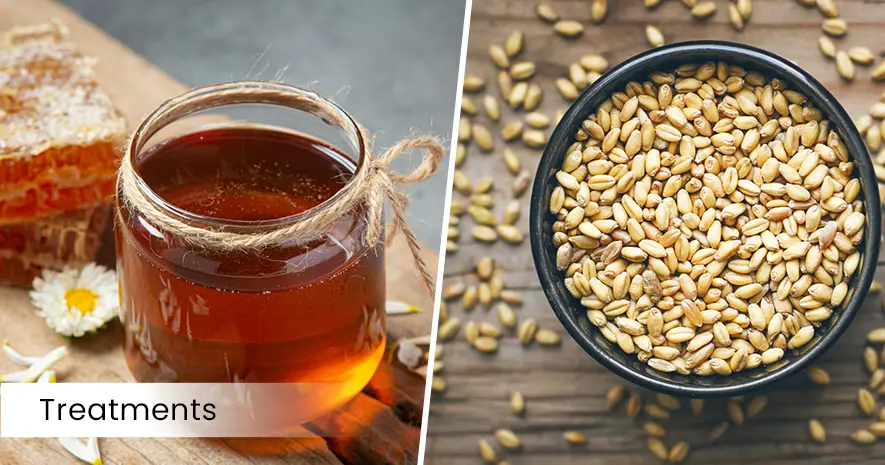
The fundamental concept of Ayurvedic nutrition is that "like attracts like"; foods that enhance a Dosha will agitate it, whereas foods with opposing qualities will soothe it. Below is a guide to balancing the three primary Doshas through your diet.
| Dosha Type | Beneficial Foods | Non-Beneficial Foods |
|---|---|---|
| Vata | Foods with sweet and hot properties. Examples include wheat, black gram, milk products, sesame oil, and dates. Ginger and garlic should be used to support variable digestion. | Foods that are dry, cold, and astringent. Avoid barley, horse gram, bitter gourd, watermelon, honey, and sugarcane juice. |
| Pitta | Foods with cold, dry, sweet, and bitter qualities. Examples include wheat, green gram, ghee, fresh buttermilk, snake gourd, old jaggery, and rock salt. | Foods that are hot, pungent, and sharp. Avoid sour curds, beef, green leafy vegetables, unripe mango, garlic, and chillies. |
| Kapha | Foods that are light, hot, dry, and pungent. Examples include barley, mustard oil, bitter gourd, honey, old wine, and dry ginger. | Foods that are sweet, cold, and heavy. Avoid fresh rice, buffalo's milk, sweet potato, banana, mutton, and freshly prepared beverages. |
Food is considered the greatest medicament, serving as the basis for strength, complexion, intellect, and overall life. By knowing your Prakriti and choosing your Ahara (diet) accordingly, you can actively prevent disease and maintain an optimal state of well-being.
1. How to identify your Prakriti?
Your Prakriti is identified by checking your natural body type, digestion, and personality. Vata types typically exhibit a light, thin frame with active mind and variable digestion. Pitta constitutions are characterized by a moderate, athletic build, a sharp intellect, and strong digestion. Kapha individuals possess a solid, heavy physical structure accompanied by steady stamina and a calm, grounded temperament.
2. How early can I identify my child's Prakriti to guide their nutrition?
A child's Prakriti is present at birth, but it is hidden because childhood is naturally a Kapha stage of growth. Their true constitution becomes clearer as they grow older. You can still notice their natural digestion, sleep, and behavior from an early age, and support them with gentle, dosha-friendly spices in family meals.
3. How does modern intermittent fasting align with Ayurvedic Prakriti principles?
Ayurveda agrees with time-restricted eating, but says fasting should not be the same for everyone; it must be based on your body type. People with a Vata constitution need shorter fasts as long fasting can cause anxiety. Kapha types benefit the most from longer fasts, as it helps boost their slow metabolism and reduce excess weight. Pitta types should follow moderate fasting to avoid acidity due to their strong digestive fire

October 22, 2026

October 16, 2026

October 09, 2026

September 24, 2026

September 19, 2026

September 18, 2026

September 03, 2026

August 22, 2026
August 19, 2026
August 11, 2026

August 06, 2026
We use cookies that are necessary for the smooth operation of the website, to improve our website and to display advertising relevant to you on social media platforms and partner websites. By clicking "Accept all", you agree to the use of cookies for convenience features and statistics and tracking. You can change these settings again at any time. If you do not agree, we will limit ourselves to technically necessary cookies. For more information, please see our privacy policy .